— Chapter VIII of XIII —

España

Spain beyond the Basque north. A cove on the east coast of Ibiza in October light. The white architecture of Dalt Vila that taught Le Corbusier how to be modern. The Renaissance fortress that has been watching the Mediterranean for five hundred years. And, mid-mainland, a metal shop shutter painted into a face.

Eivissa · 4 Photographs
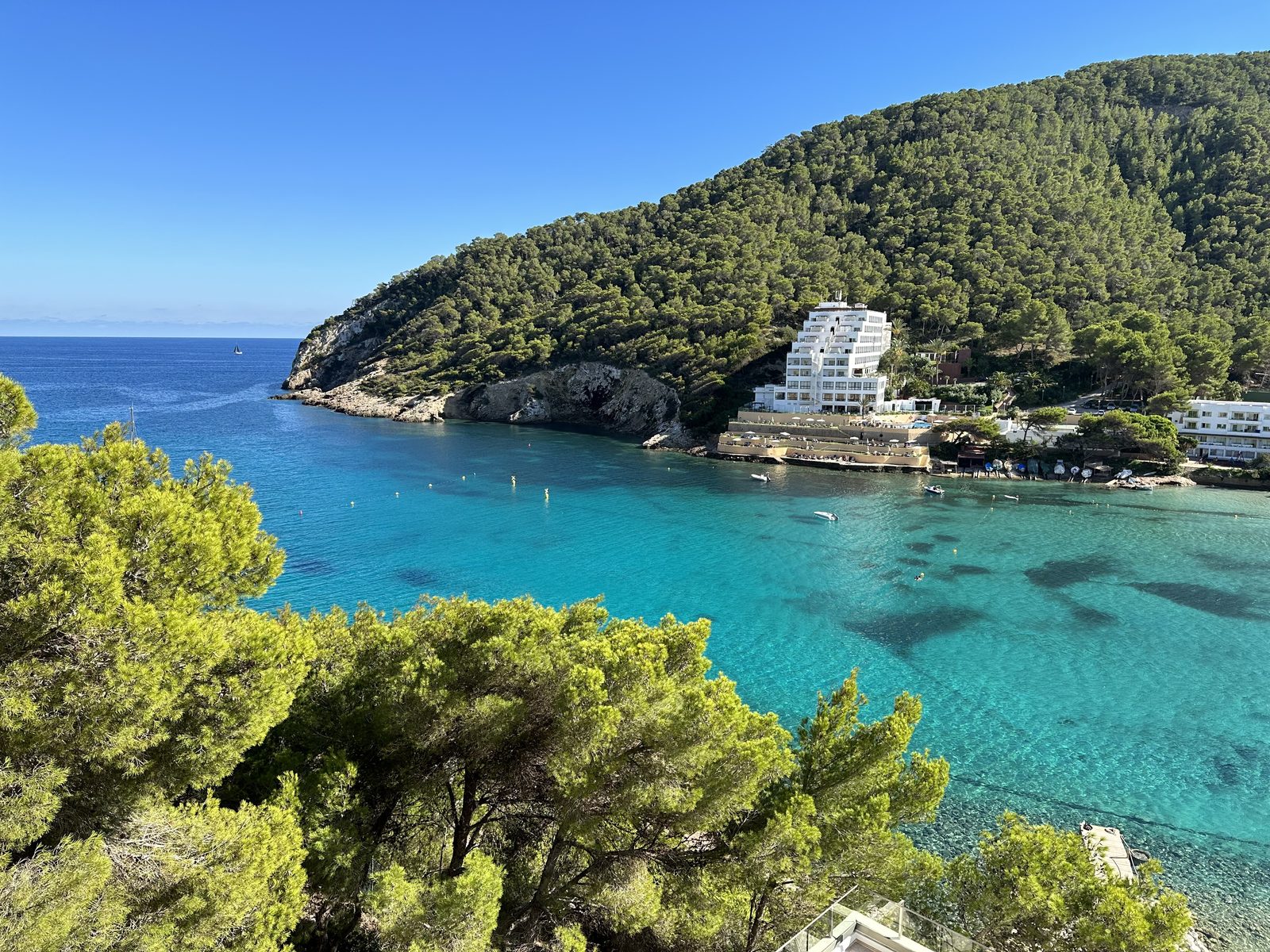
A Mediterranean cove on the east coast of Ibiza — turquoise water, a white cluster of buildings on the headland, pine trees in the foreground
No. 01 · Chapter VIII · España

Cala

A cove on the east coast of Ibiza · Illes Balears

Cala is the Catalan word for a small Mediterranean cove — usually backed by pine, fronted by water clear enough to see the rocks at four metres down. Ibiza has dozens of them, each with its own micro-economy of fishermen, tourists, and a single white hotel that may or may not still be in business. The pines reach the water because nothing else will grow in the calcium-magnesium soil, and the water is this colour because there are almost no rivers carrying silt into it. — Photographer's Note

"El mar. La mar.
El mar. ¡Sólo la mar!"
The sea. The sea.
The sea. Only the sea!

— Rafael Alberti · Marinero en tierra · 1924

Mon 2 Oct 2023 · 16:15  ·  Apple iPhone 14 Pro Max  ·  Main Camera  ·  6.86mm  ·  f/1.78  ·  1/2470s  ·  ISO 80
Cala Llonga · east coast of Eivissa · Balears 38.9322° N · 1.4836° E
View on Maps ↗
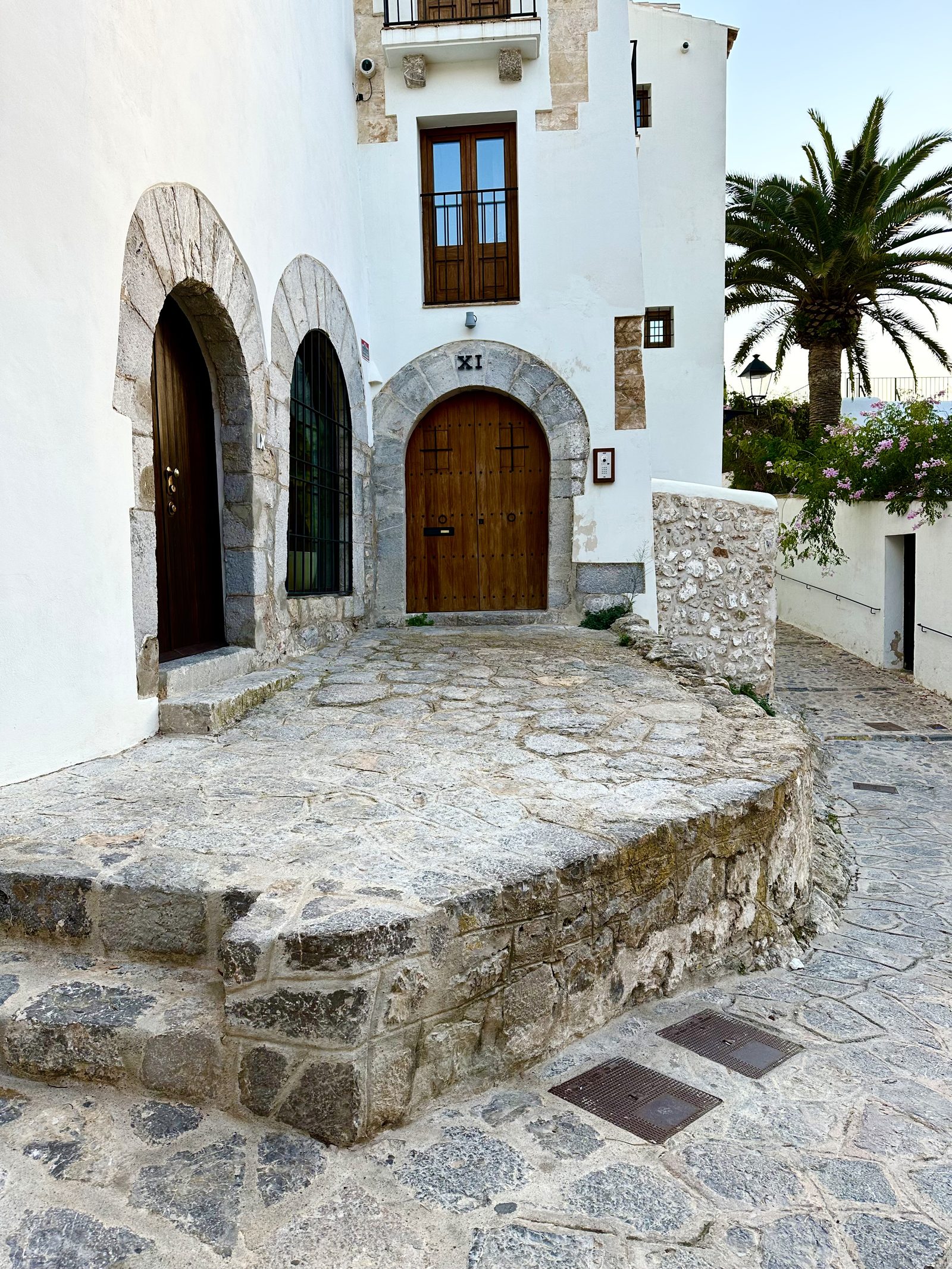
A whitewashed building in Dalt Vila with two arched doorways, one with a wooden door numbered XI, raised on a stone forecourt, with a palm tree to the right
No. 02 · Chapter VIII · España

Dalt Vila

The Upper Town · Eivissa · UNESCO World Heritage · 1999

Phoenicians built the first walls here twenty-six centuries ago. Then the Romans came, then the Moors, then the Catalans under Jaume I in 1235. Felipe II commissioned the Renaissance fortifications that still ring the hill, built between 1554 and 1585 — the most complete Renaissance bastion system that survives anywhere. The whitewash on the walls is reapplied every spring; it has been done so many times that the walls themselves are now thicker, faintly, than the stone underneath. In 1933, Le Corbusier came here and said the Ibicenco peasants had given him the greatest architectural lesson of his life. Then he went home and invented Modernism. — Photographer's Note

"The Ibicenco peasants gave me the greatest architectural lesson I have ever received."

— Le Corbusier · after visiting Ibiza · 1933

Tue 3 Oct 2023 · 19:18  ·  Apple iPhone 14 Pro Max  ·  Main Camera  ·  6.86mm  ·  f/1.78  ·  1/130s  ·  ISO 80

Dalt Vila · Eivissa · Illes Balears 38.9075° N · 1.4380° E
View on Maps ↗
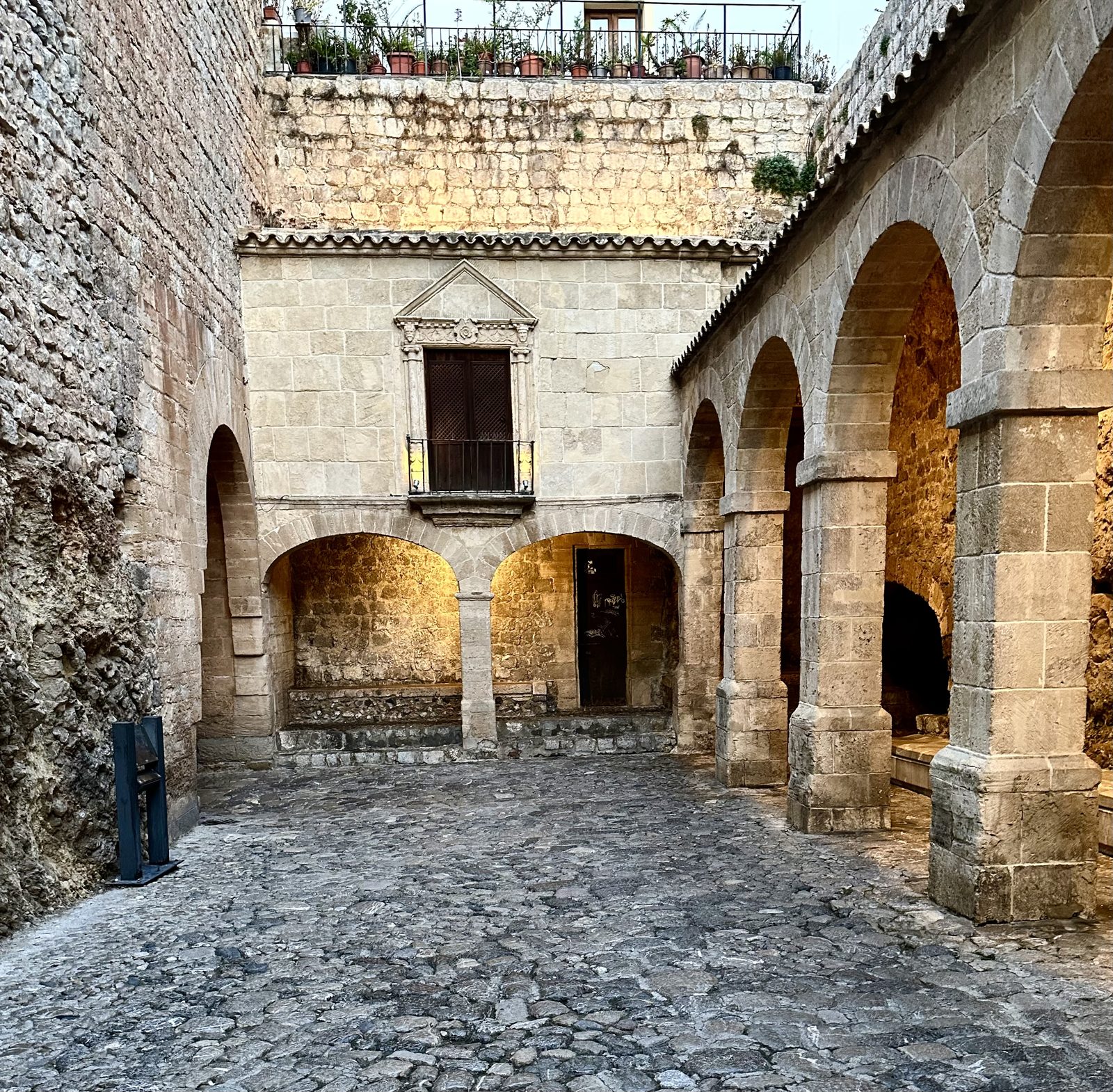
The inner courtyard of the Castell d'Eivissa — stone arches, cobbled patio, a balconied window above, planters along the upper terrace
No. 03 · Chapter VIII · España

Patio de Armas

Castell d'Eivissa · Dalt Vila · sixteenth century

Patio de Armas — the parade court of the castle. The stones underfoot are limestone laid by the same Italian engineers Felipe II hired for his Spanish forts in the Americas; the arcades behind them are Catalan Gothic, three centuries older; the wrought-iron balcony above is eighteenth-century. Three eras met in this courtyard, and the courtyard accepted them all without complaint. The pots on the upper terrace are kept by a family who have lived in this part of the castle since their grandmother's grandmother. They keep watering them. — Photographer's Note

"Caminante, no hay camino,
se hace camino al andar."
Wanderer, there is no path;
the path is made by walking.

— Antonio Machado · Proverbios y cantares · 1912

Tue 3 Oct 2023 · 19:37  ·  Apple iPhone 14 Pro Max  ·  Main Camera  ·  6.86mm  ·  f/1.78  ·  1/50s  ·  ISO 400

Castell d'Eivissa · Dalt Vila 38.9067° N · 1.4373° E
View on Maps ↗
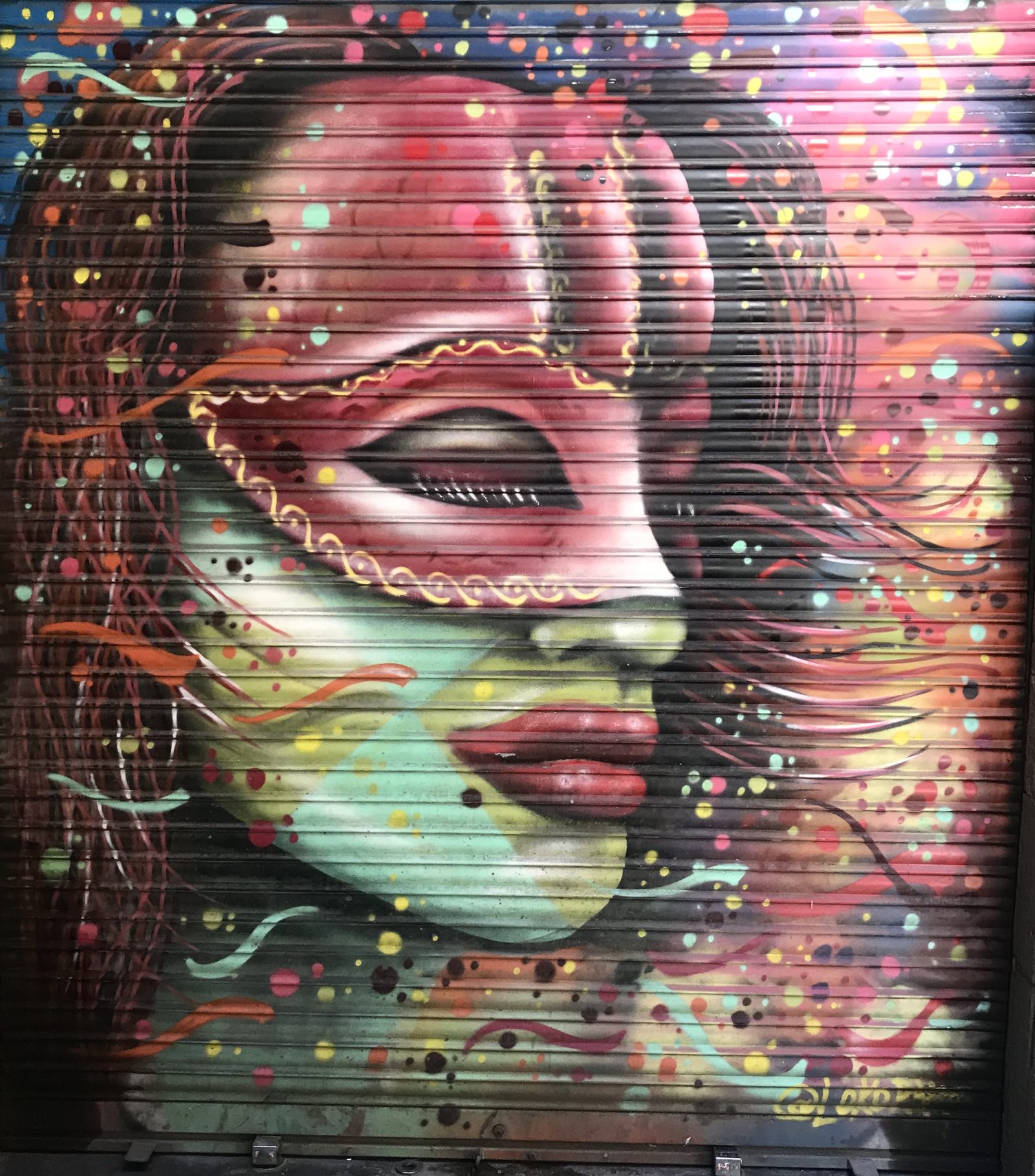
A vivid street mural painted on a metal roller shutter — a woman's face in pinks and reds, eyes closed, with a half-mask of golden ornament across the eyes and scattered confetti of colour across the surface
No. 04 · Chapter VIII · España

Arte Callejero

A roller shutter · somewhere in Spain · 2018

Street art in Spain runs in a particular grammar — a roller shutter on a small shop, painted at night when the shop is closed, so that the city has one face by day and another by night. Madrid's Lavapiés district has more than a hundred of them; Barcelona's El Raval, Granada's Realejo, almost any city with cheap rent and good light. This one was painted with confetti on the cheeks and a gold half-mask across the eyes — she is half awake, half not, like the city's own daily rhythm. — Photographer's Note

"Art washes away from the soul the dust of everyday life."

— Pablo Picasso · born Málaga, 1881

Thu 4 Oct 2018 · 15:31  ·  Apple iPhone 7 Plus  ·  Wide Camera  ·  4mm  ·  f/1.8  ·  1/33s  ·  ISO 32

A street in Spain · exact location unrecorded España · 2018
View on Maps ↗
— Next Chapter —
Hellas
Chapter IX of XIII
← All Chapters