— Chapter IX of XIII —

Hellas

Two days in Oia, on the north tip of Santorini, looking down into the caldera of the volcano that exploded 3,600 years ago, ended the Minoan civilisation, and may have given Plato the story of Atlantis. The villagers built their whitewashed houses, their bell towers, their blue domes, and their cobalt doors over the rim — and have lived on the lip of catastrophe with great elegance ever since.

Oia · Santorini · Cyclades · 4 Photographs
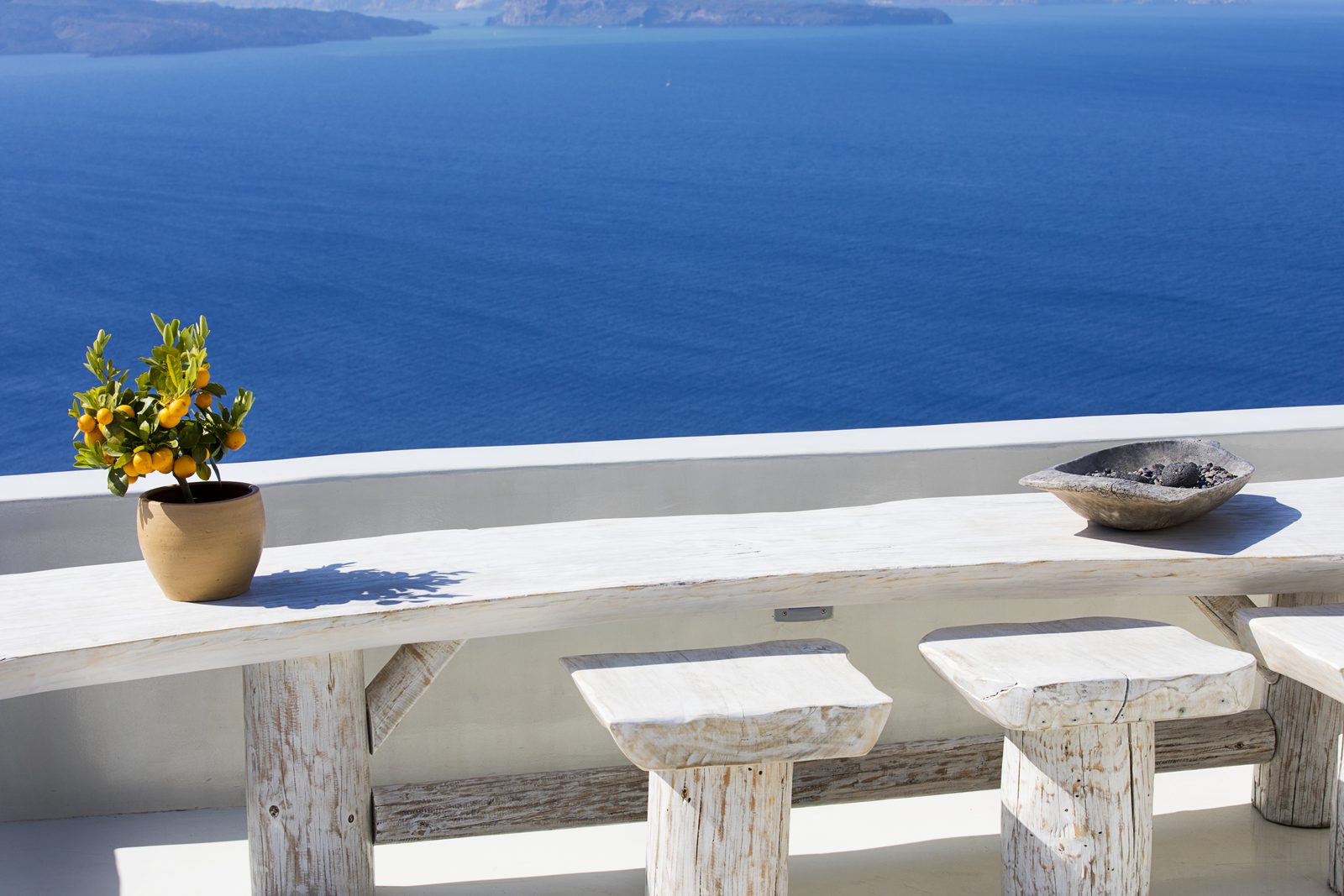
A whitewashed terrace in Oia with a kumquat tree in a clay pot, a rough-cut wooden bench, and the deep blue caldera of Santorini below
No. 01 · Chapter IX · Hellas

A View on the Caldera

Oia · Santorini · late afternoon

Six in the evening. The terrace belongs to a small hotel built into the cliff face, with one rule: the chairs face the water. The water, technically, is the inside of a volcano — the Minoan eruption around 1600 BC blew the centre out of the island and let the Aegean rush in. What you are looking at is the inside of the crater. The kumquat tree in the clay pot does not know this and bears its fruit unconcerned. — Photographer's Note

"The light of Greece opened my eyes, penetrated my pores, expanded my whole being."

— Henry Miller · The Colossus of Maroussi · 1941

Mon 2 Jul 2018 · 17:56  ·  Canon EOS 5D Mark IV  ·  EF 16–35mm f/2.8L II  ·  35mm  ·  f/13  ·  1/160s  ·  ISO 320
Oia · Santorini · Cyclades 36.4612° N · 25.3753° E
View on Maps ↗
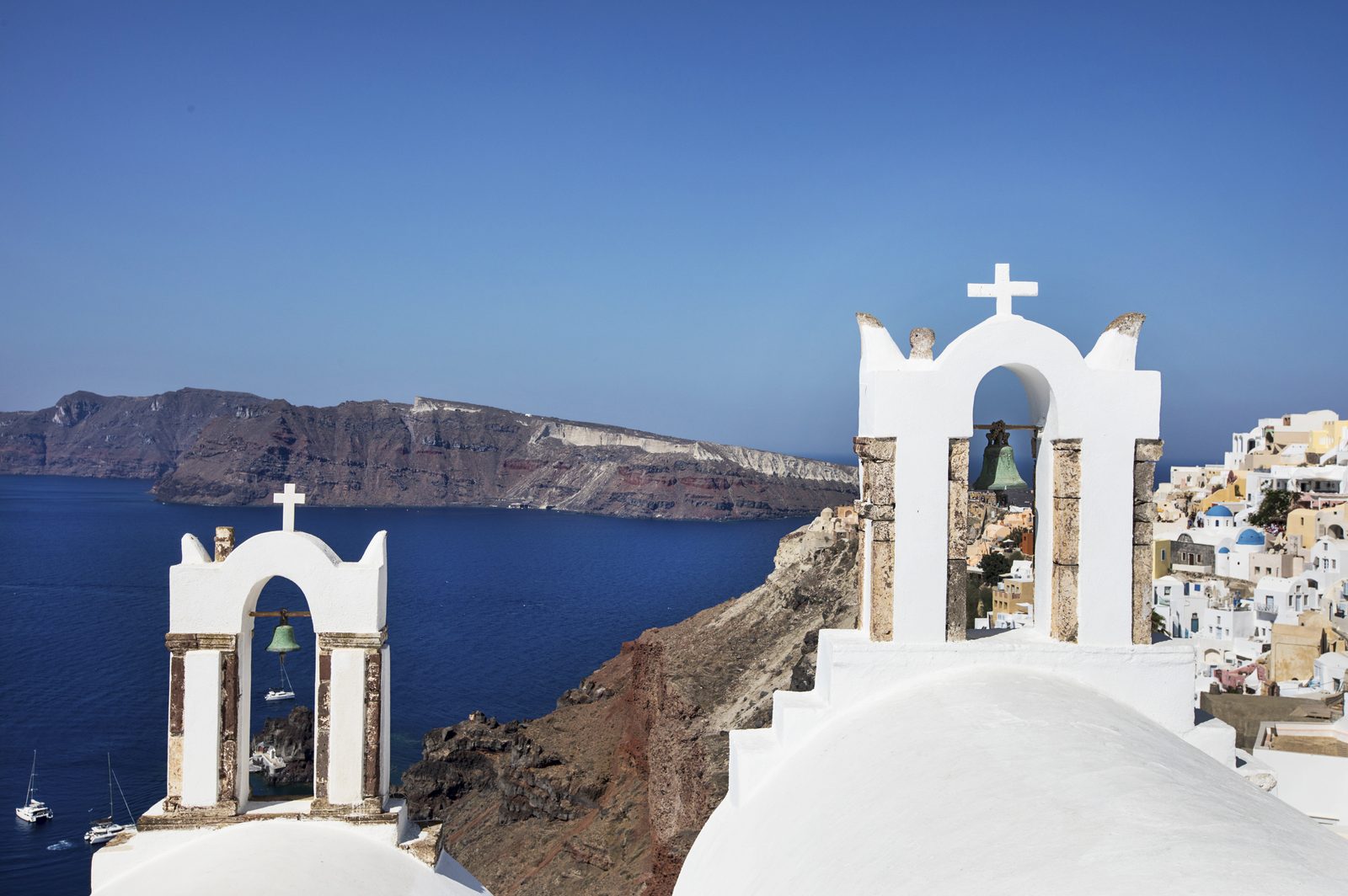
Two whitewashed Cycladic bell gables on the edge of the Santorini caldera, with the volcanic cliff of Therasia and the deep blue Aegean behind them
No. 02 · Chapter IX · Hellas

The Bells of Oia

Cycladic bell gables · facing the volcano · evening

Five minutes after the last frame, twenty metres further along the path. The bell gables — kambanaria, in Greek — are the Cycladic answer to the bell tower; they are lighter, cheaper, less likely to come down in an earthquake, and they look out over the caldera like sentries who long ago stopped expecting anything to happen. The island opposite is Therasia, separated from Oia by 4.2 kilometres of seawater and a hundred metres of submerged caldera floor. — Photographer's Note

"Σα βγεις στον πηγαιμό για την Ιθάκη,
να εύχεσαι νά 'ναι μακρύς ο δρόμος."
As you set out for Ithaka,
pray that the road is a long one.

— Constantine Cavafy · Ιθάκη · 1911

Mon 2 Jul 2018 · 18:01  ·  Canon EOS 5D Mark IV  ·  EF 16–35mm f/2.8L II  ·  35mm  ·  f/13  ·  1/125s  ·  ISO 320

Oia · facing Therasia across the caldera 36.4615° N · 25.3743° E
View on Maps ↗
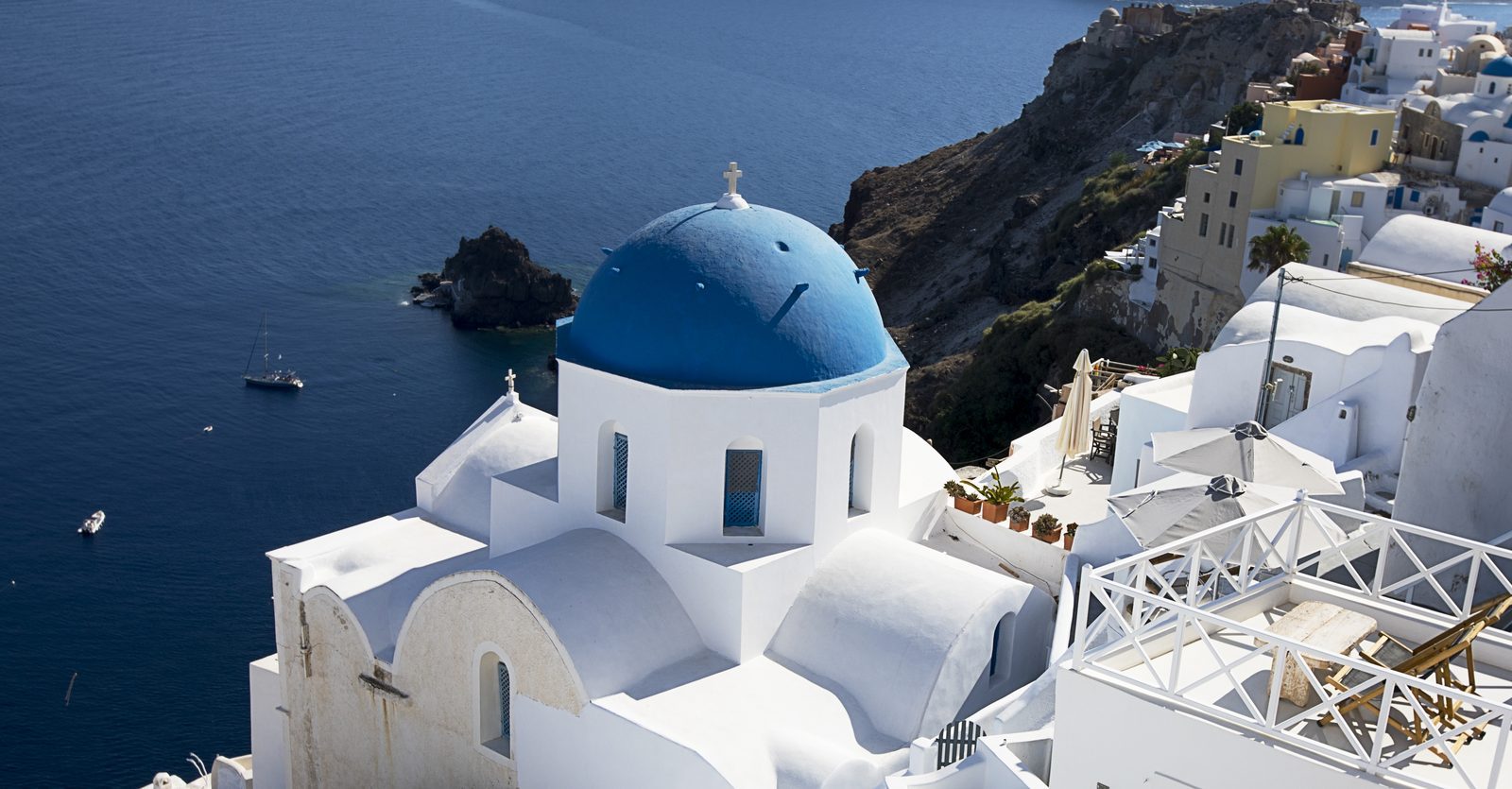
The iconic blue-domed church of Oia — a small Greek Orthodox church with a sky-blue dome, white walls, the Aegean and a single sailboat below, and the volcanic cliffs in the background
No. 03 · Chapter IX · Hellas

The Blue Dome

A church in Oia · noon

There are more than three hundred of these domes on Santorini, and most of them are some shade of blue. The pigment was originally lazurite or, more cheaply, copper sulphate — both readily available on a volcanic island. Greek Orthodox tradition assigns the colour to the heavens, the Virgin's mantle, and the protection of sailors who sail underneath it. After 1936, when Ioannis Metaxas codified the colour scheme of the Greek flag, the blue and white acquired a second, secular meaning. The churches kept theirs from before. — Photographer's Note

"Greek light is, I believe, the truest light there is."

— Odysseas Elytis · Nobel Lecture · 1979

Wed 4 Jul 2018 · 12:01  ·  Canon EOS 5D Mark IV  ·  EF 70–200mm f/2.8L IS II  ·  70mm  ·  f/13  ·  1/200s  ·  ISO 320

Oia · Santorini · Cyclades 36.4612° N · 25.3753° E
View on Maps ↗
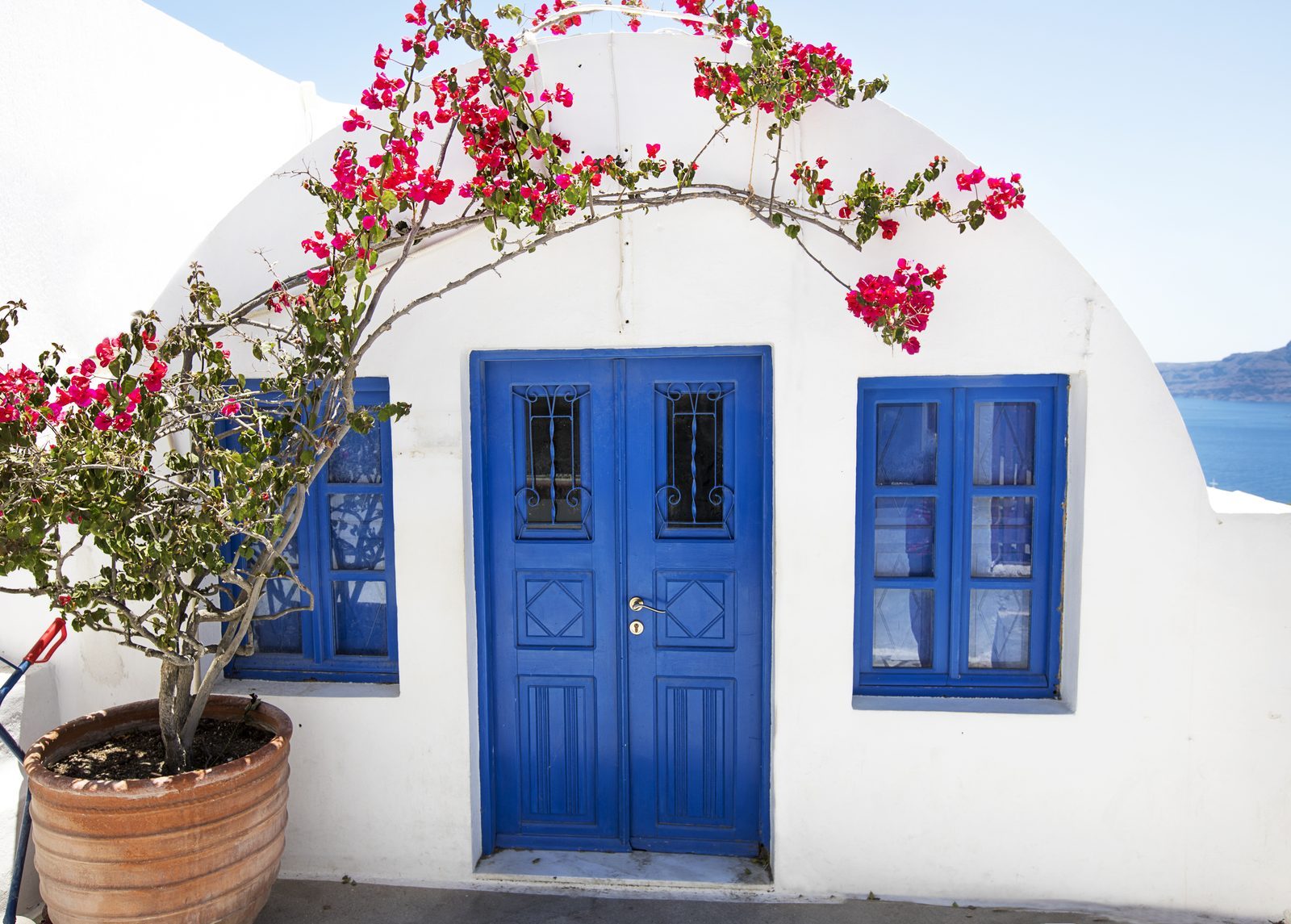
A cobalt-blue Cycladic double door in Oia, set in a whitewashed wall, with two flanking blue windows and a cascade of magenta bougainvillea overhead from a potted vine
No. 04 · Chapter IX · Hellas

Cobalt and Bougainvillea

A door in Oia · two minutes after the bell

Two minutes after No. 03 and one street over. The Cycladic blue on doors is a tradition older than the cameras that photograph it: in pre-Christian times it kept the evil eye out, then it kept the Ottomans out, then it kept the British and the painters out — though the painters mostly painted it anyway. The bougainvillea, like every other bougainvillea on these islands, is not native — it arrived from Brazil in the nineteenth century and has never looked back. Together the door and the vine make the postcard the island sells to itself. — Photographer's Note

"Όταν κλείνει μια πόρτα, ανοίγει ένα παράθυρο."
When one door closes, a window opens.

— Greek proverb (also Cervantes · Don Quixote · 1605)

Wed 4 Jul 2018 · 12:03  ·  Canon EOS 5D Mark IV  ·  EF 70–200mm f/2.8L IS II  ·  70mm  ·  f/13  ·  1/320s  ·  ISO 320

Oia · Santorini · Cyclades 36.4612° N · 25.3753° E
View on Maps ↗
— Next Chapter —
The Americas
Chapter X of XIII
← All Chapters