— Chapter XI of XIII —

México

Mexico in sixteen frames over four years and seven visits — the galleries of la Ciudad de México, the colonial streets of San Miguel de Allende at golden hour, the Pacific cliffs of Cabo, the jungle of Costalegre, and a temazcal at four in the afternoon on the second day of the year. A country I keep returning to because every time it shows me a different room.

CDMX · San Miguel · Cabo · Costalegre · 16 Photographs
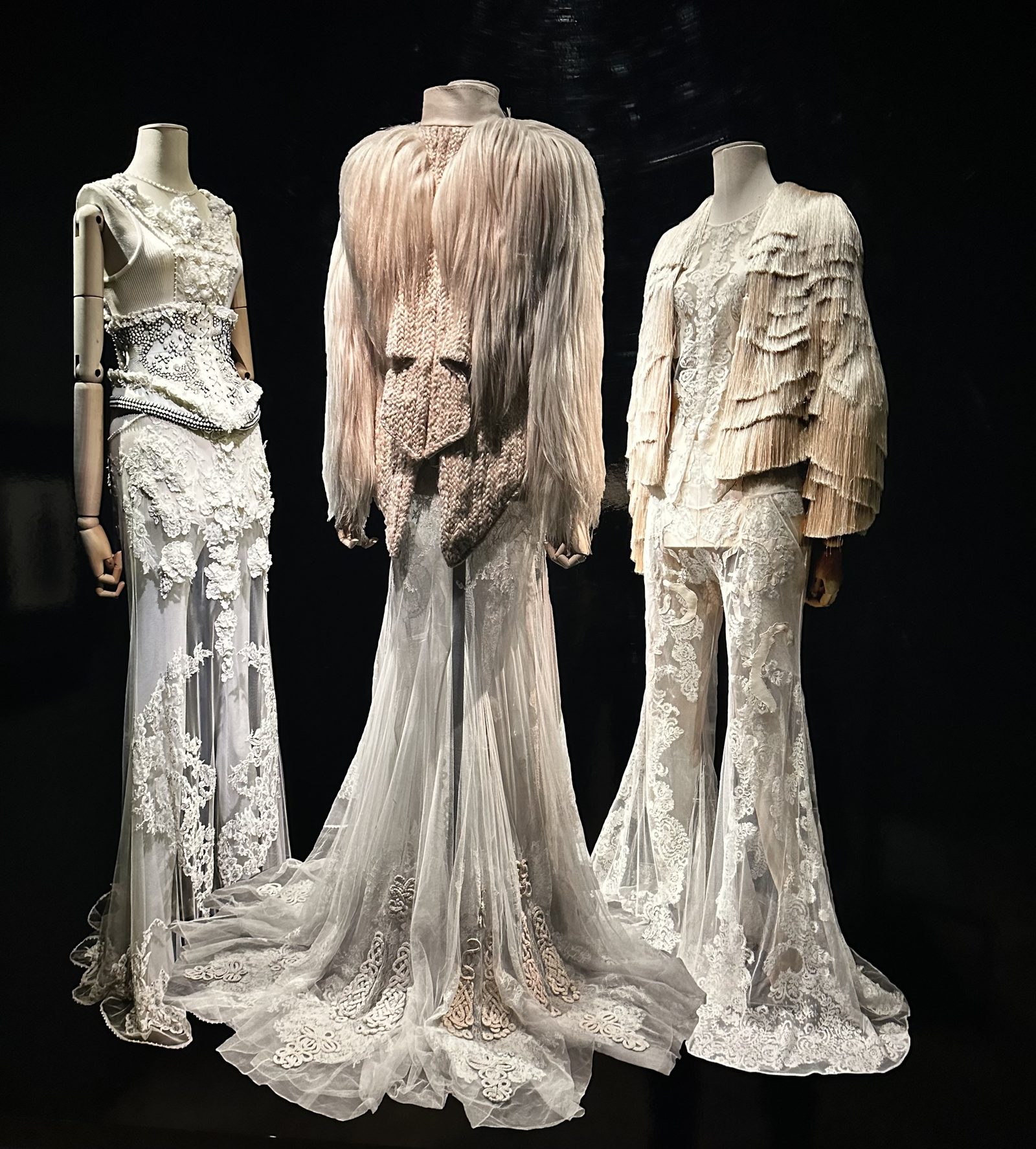
Three couture wedding gowns on mannequins under museum lighting — lace, tulle, feathers, ivory and rose tones
No. 01 · Chapter XI · México

Three Brides

Casa Azul · Frida Kahlo Museum · Coyoacán · CDMX

Three wedding dresses on display at La Casa Azul — the cobalt-walled house in Coyoacán where Frida Kahlo was born, lived, painted, and died. When she died in 1954, Diego Rivera sealed her dressing room and forbade anyone to open it; it stayed closed for fifty years. In 2004, the executors finally turned the key and found three hundred of her dresses and accessories, untouched. The Casa now exhibits Mexican couture on rotation in the same rooms — these gowns hanging where hers once hung, in the only museum that doubles as a closet she might have kept.— Photographer's Note

"Solitude is the profoundest fact of the human condition."

— Octavio Paz · El Laberinto de la Soledad · 1950

Wed 5 Apr 2023 · 14:41  ·  Apple iPhone 13 Pro Max  ·  Main Camera  ·  5.7mm  ·  f/1.5  ·  1/685s  ·  ISO 50
Museo Frida Kahlo · Casa Azul · Coyoacán19.3551° N · 99.1623° W
View on Maps ↗
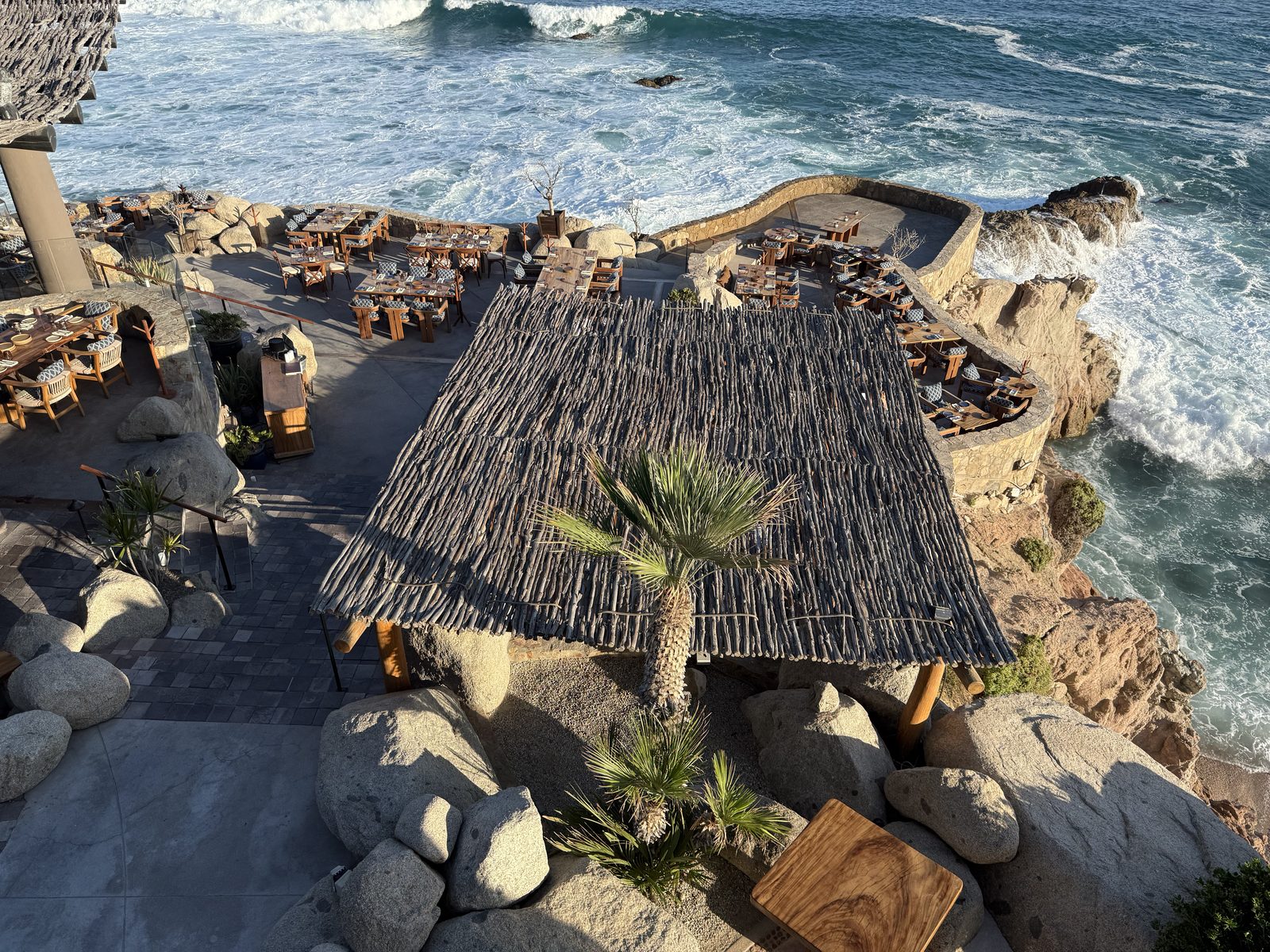
A clifftop restaurant with thatched palapa roof overlooking the Pacific surf crashing against rocks at Cabo San Lucas
No. 02 · Chapter XI · México

The Pacific Cliff

Los Cabos · Baja California Sur · late afternoon

Six in the evening at the southern tip of the Baja peninsula, where the Pacific and the Sea of Cortez meet in a long argument of currents. The palapa is open-air, the surf is fifteen metres below, and the kitchen catches the fish it serves the same morning. Jacques Cousteau called the Sea of Cortez the aquarium of the world. From the railing, you can sometimes count five species of bird in the same frame without trying.— Photographer's Note

"The Sea of Cortez is the aquarium of the world."

— Jacques-Yves Cousteau · 1973

Tue 22 Jul 2025 · 17:55  ·  Apple iPhone 16 Pro Max  ·  Main Camera  ·  6.8mm  ·  f/1.78  ·  1/2050s  ·  ISO 80

Los Cabos · Baja California Sur22.8905° N · 109.9167° W
View on Maps ↗
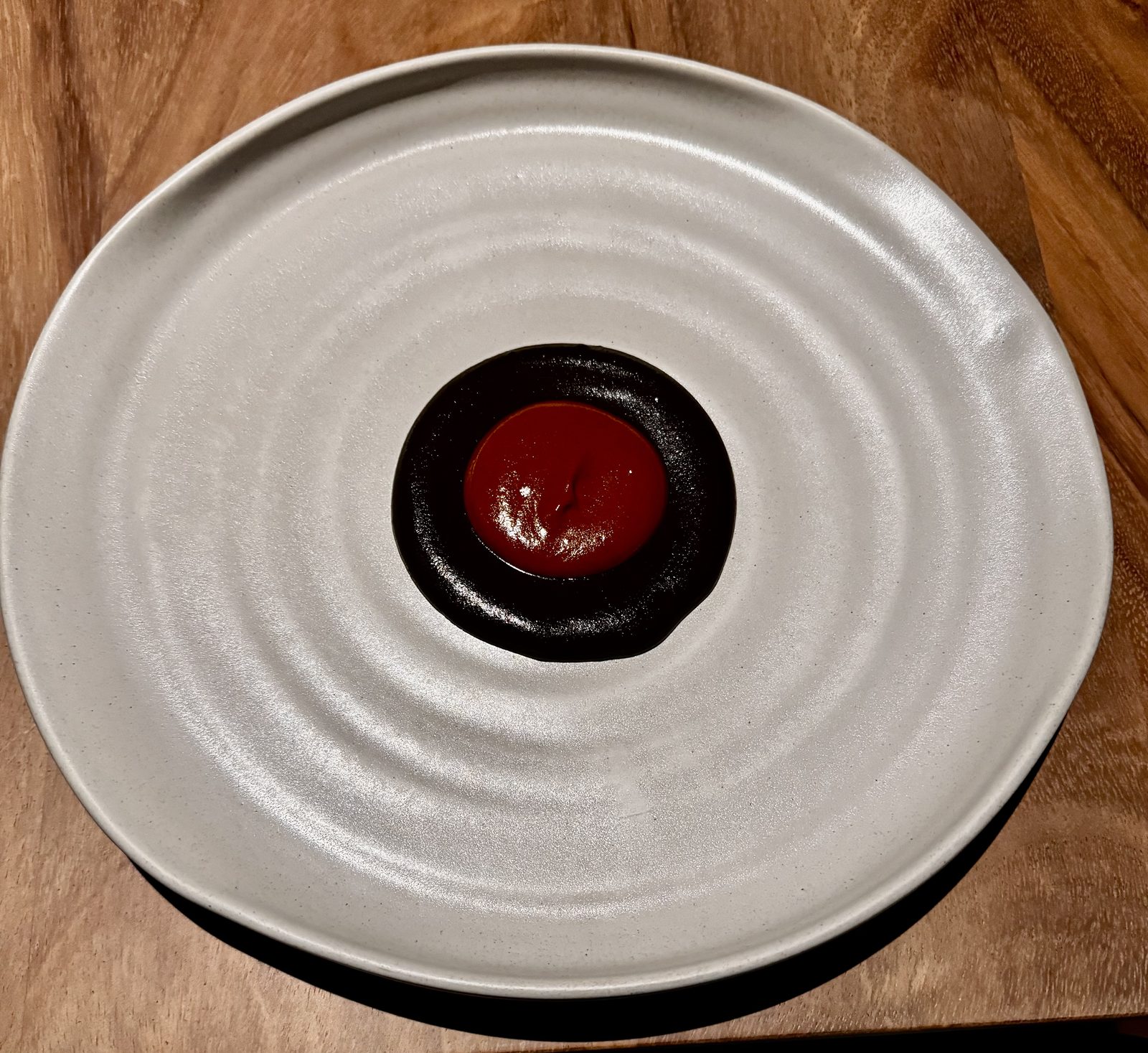
A minimalist ceramic plate with concentric throwing rings, a black ring of mole negro and a vivid red salsa rojo at the center
No. 03 · Chapter XI · México

Mole, Negro y Rojo

A tasting menu · Ciudad de México · late dinner

A single course in a tasting menu — black mole and red salsa, ringed on a thrown ceramic plate. Mole negro is made from up to thirty-five ingredients, including chocolate, four kinds of chile, plantain, and sometimes a piece of charred tortilla; it takes the kitchen two days. Enrique Olvera describes Mexican cuisine as "the sum of conversations" — between codes, regions, centuries. This plate is one sentence in that conversation.— Photographer's Note

"Mexican cuisine is the sum of conversations."

— Enrique Olvera · chef · Pujol

Wed 3 Jul 2024 · 23:12  ·  Apple iPhone 15 Pro Max  ·  Main Camera  ·  6.8mm  ·  f/1.78  ·  1/60s  ·  ISO 800

Polanco · Ciudad de México19.4326° N · 99.1956° W
View on Maps ↗
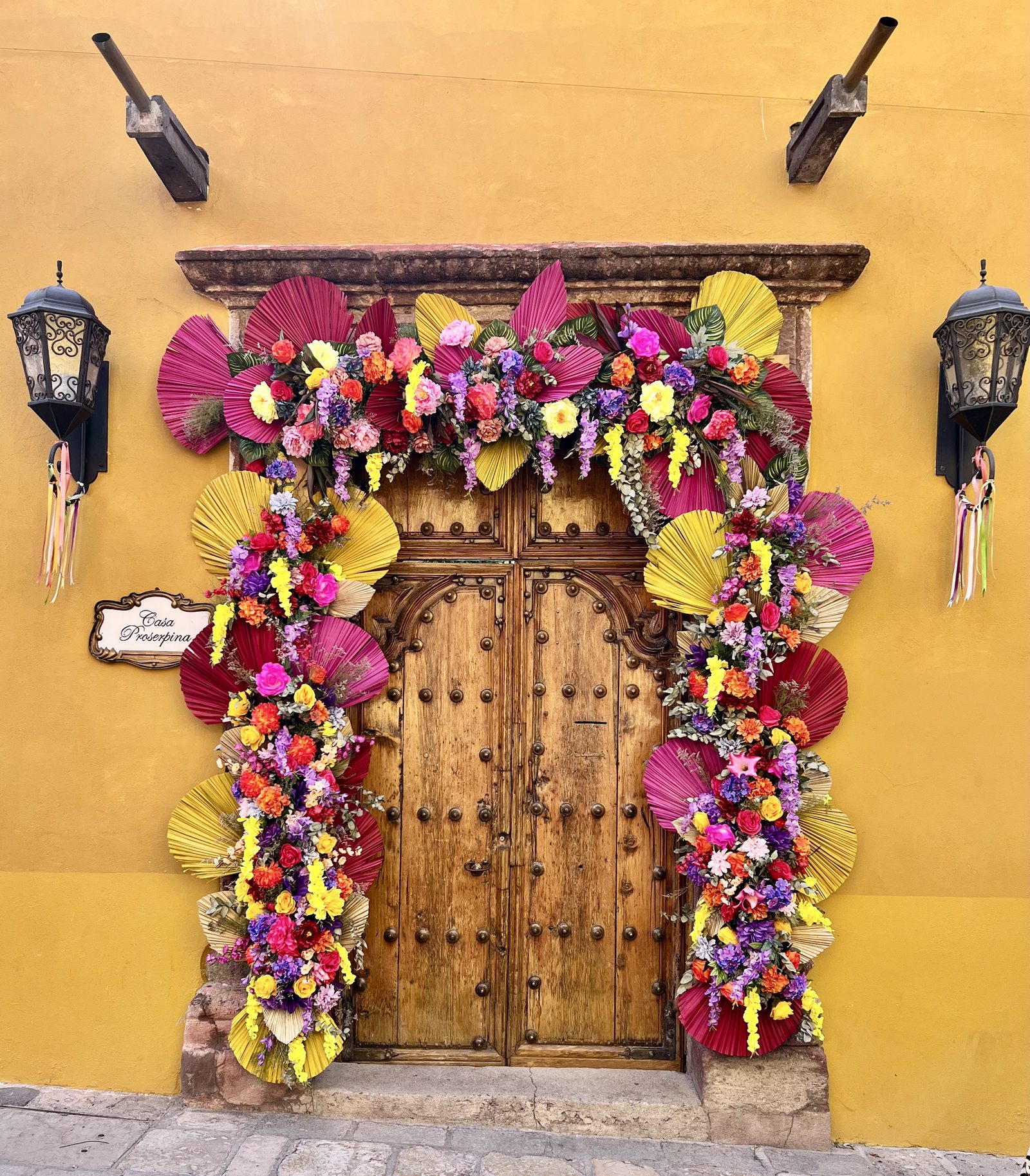
A weathered wooden door on a yellow facade in San Miguel de Allende, framed by a thick garland of brightly coloured paper flowers and fans
No. 04 · Chapter XI · México

Casa Proserpina

San Miguel de Allende · Guanajuato

In San Miguel, doors are dressed for the holiday they sit closest to — Independence Day, the Day of the Dead, the saint's day of whoever lives behind them. This one, in early September, is in early-autumn mode: ribbons, paper fans, marigolds beginning. The yellow walls are not paint over stucco — they are paint mixed directly into the stucco, the technique still used here, six layers, replastered every spring.— Photographer's Note

"Mi casa es tu casa."
My house is your house.

— Mexican proverb · the first sentence anyone is taught

Fri 2 Sep 2022 · 16:59  ·  Apple iPhone 13 Pro Max  ·  Main Camera  ·  5.7mm  ·  f/1.5  ·  1/460s  ·  ISO 50

San Miguel de Allende · Guanajuato20.9143° N · 100.7440° W
View on Maps ↗
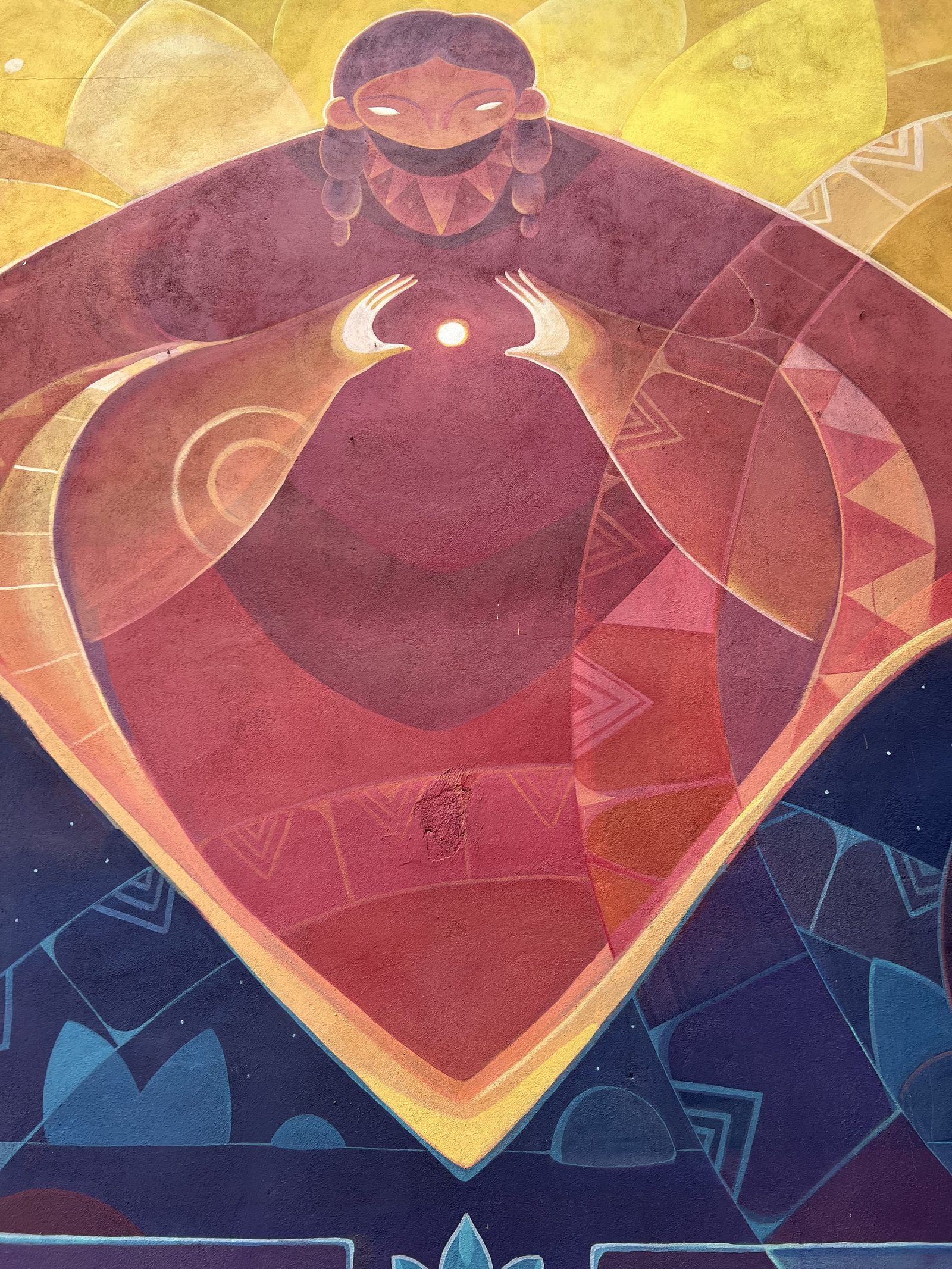
A vibrant mural of an indigenous mother figure in red and ochre with geometric patterns around her, set against a deep blue and turquoise ground
No. 05 · Chapter XI · México

Coatlicue

A mural · Mexico City · 2022

Coatlicue — "she of the serpent skirt" — is the Mexica earth mother, simultaneously mother of the sun and devourer of bodies. She is the figure Mexican muralists have been redrawing for a hundred years to remind their countrymen that their oldest mother was not European. The pose here, hands cradling a flame at the chest, is a contemporary reading: not vengeful, not skeletal, just patient. She has been waiting.— Photographer's Note

"Mexico has not one face but many. Indeed it has no face. It is the masks."

— Carlos Fuentes · Tiempo Mexicano · 1971

Sun 4 Sep 2022 · 14:21  ·  Apple iPhone 13 Pro Max  ·  Main Camera  ·  5.7mm  ·  f/1.5  ·  1/385s  ·  ISO 50

Ciudad de México · CDMX19.4326° N · 99.1332° W
View on Maps ↗
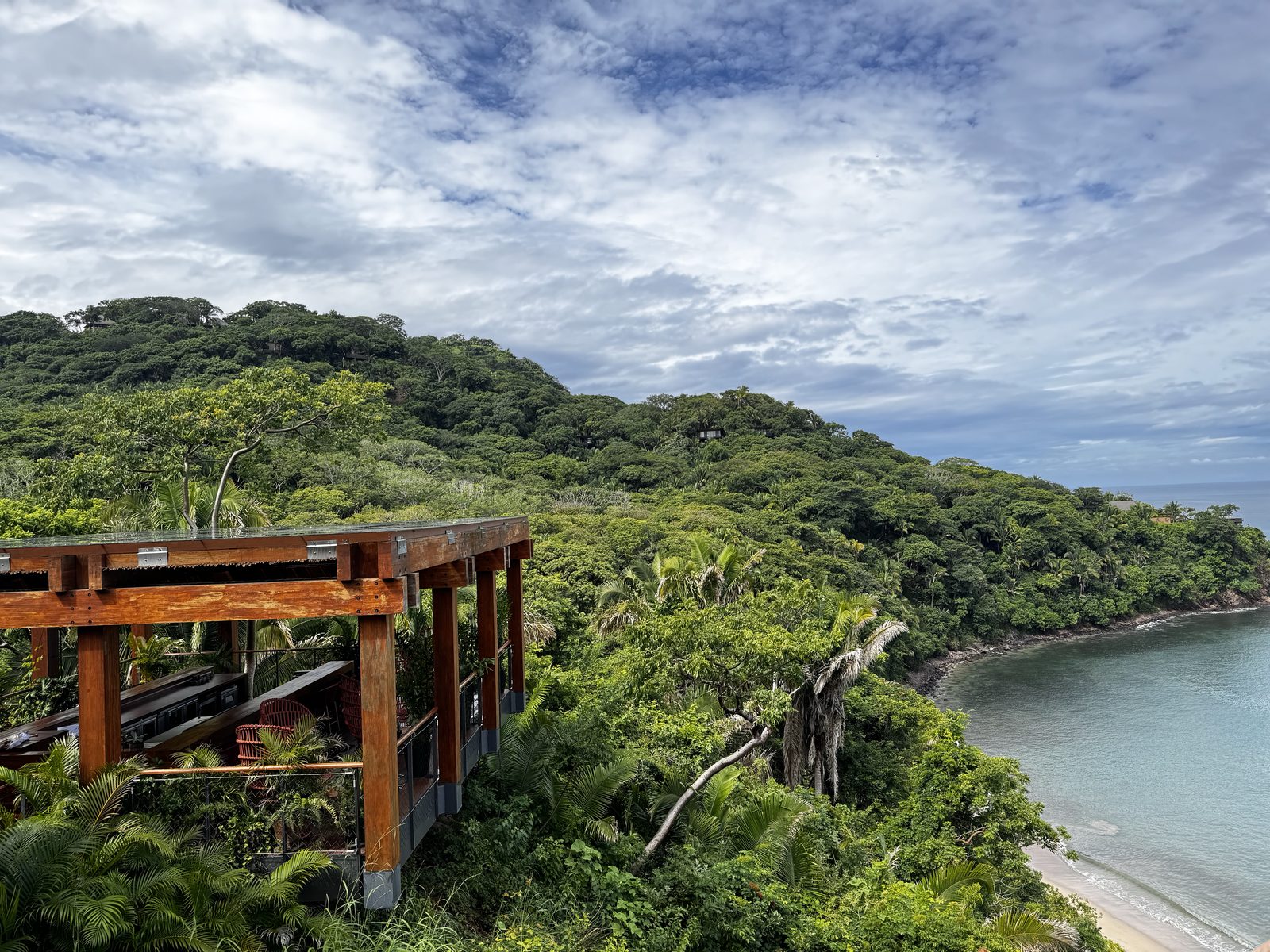
A wooden cliffside restaurant tucked into thick jungle on the Pacific coast of Mexico, a crescent beach and the sea below
No. 06 · Chapter XI · México

The Costalegre

Pacific coast · Jalisco · mid-morning

The Costalegre — "the happy coast" — runs about three hundred kilometres south from Puerto Vallarta along the Pacific, ending at Manzanillo. It is the part of the Mexican coast that did not get a highway until the 1980s; whatever was built before then is gone, and whatever has been built since has been built carefully, mostly into the jungle, with the sea politely allowed to stay below.— Photographer's Note

"La selva sabe lo que hace."
The jungle knows what it's doing.

— Mexican saying

Thu 12 Sep 2024 · 10:38  ·  Apple iPhone 15 Pro Max  ·  Main Camera  ·  6.8mm  ·  f/1.78  ·  1/1366s  ·  ISO 80

Costalegre · Jalisco · Pacific Coast19.4500° N · 105.0500° W
View on Maps ↗
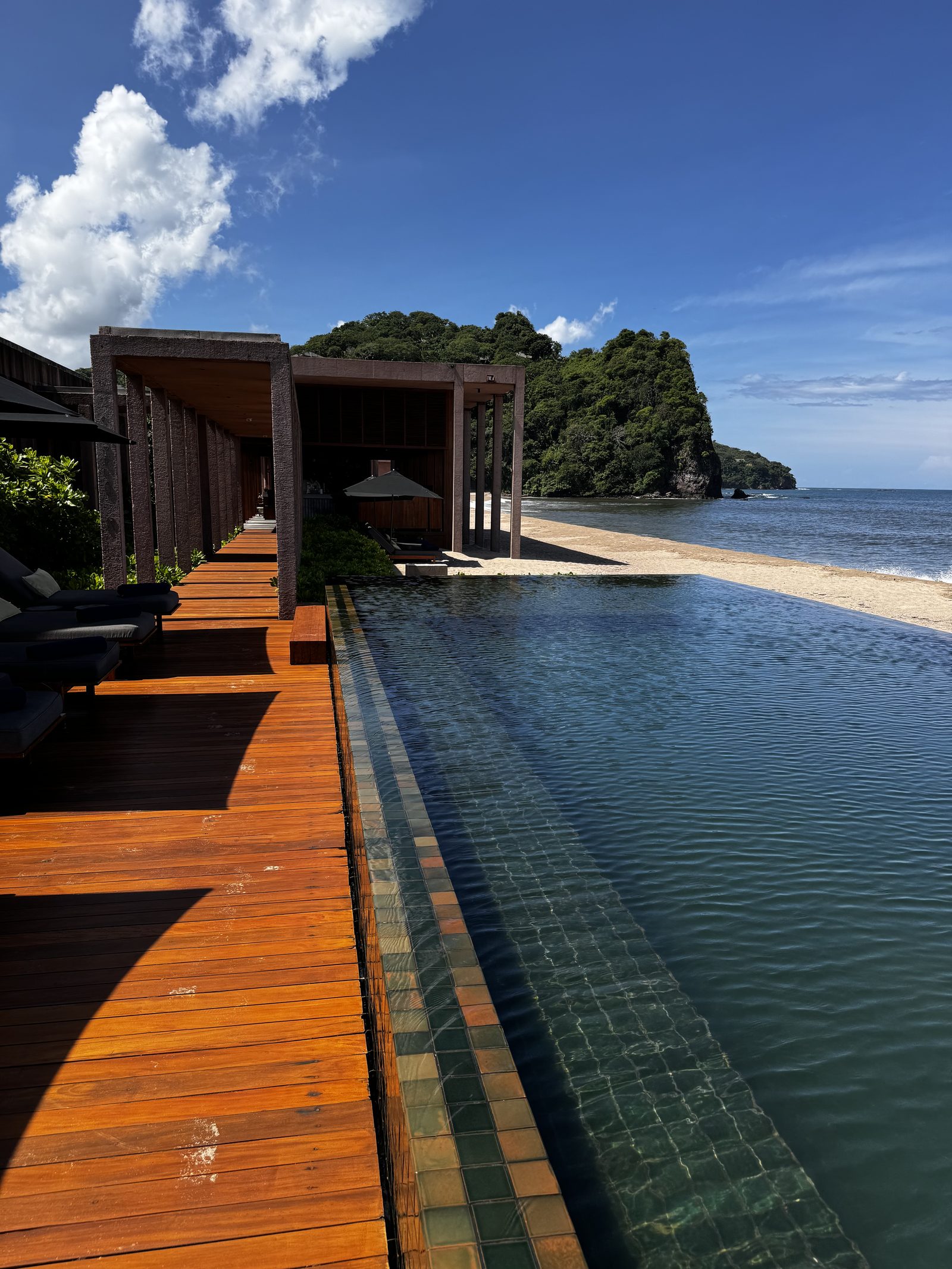
An infinity pool meeting the Pacific at the eye line, wooden deck and a palapa beside, a small islet on the horizon
No. 07 · Chapter XI · México

The Infinity

Pacific cove · Jalisco · the morning after

An infinity pool is an old idea — the Romans had them at Hadrian's villa, with the same illusion: the eye reads the lip of the water as the lip of the horizon, and the two oceans become one. Here the trick works particularly well because the actual ocean really is fifty metres below, and the water is the same colour. The islet on the horizon is uninhabited. Most of them along this coast still are.— Photographer's Note

"El agua reconoce el agua."
Water recognises water.

— Mexican proverb

Fri 13 Sep 2024 · 11:04  ·  Apple iPhone 15 Pro Max  ·  Main Camera  ·  6.8mm  ·  f/1.78  ·  1/3800s  ·  ISO 80

Costalegre · Jalisco · Pacific Coast19.4500° N · 105.0500° W
View on Maps ↗
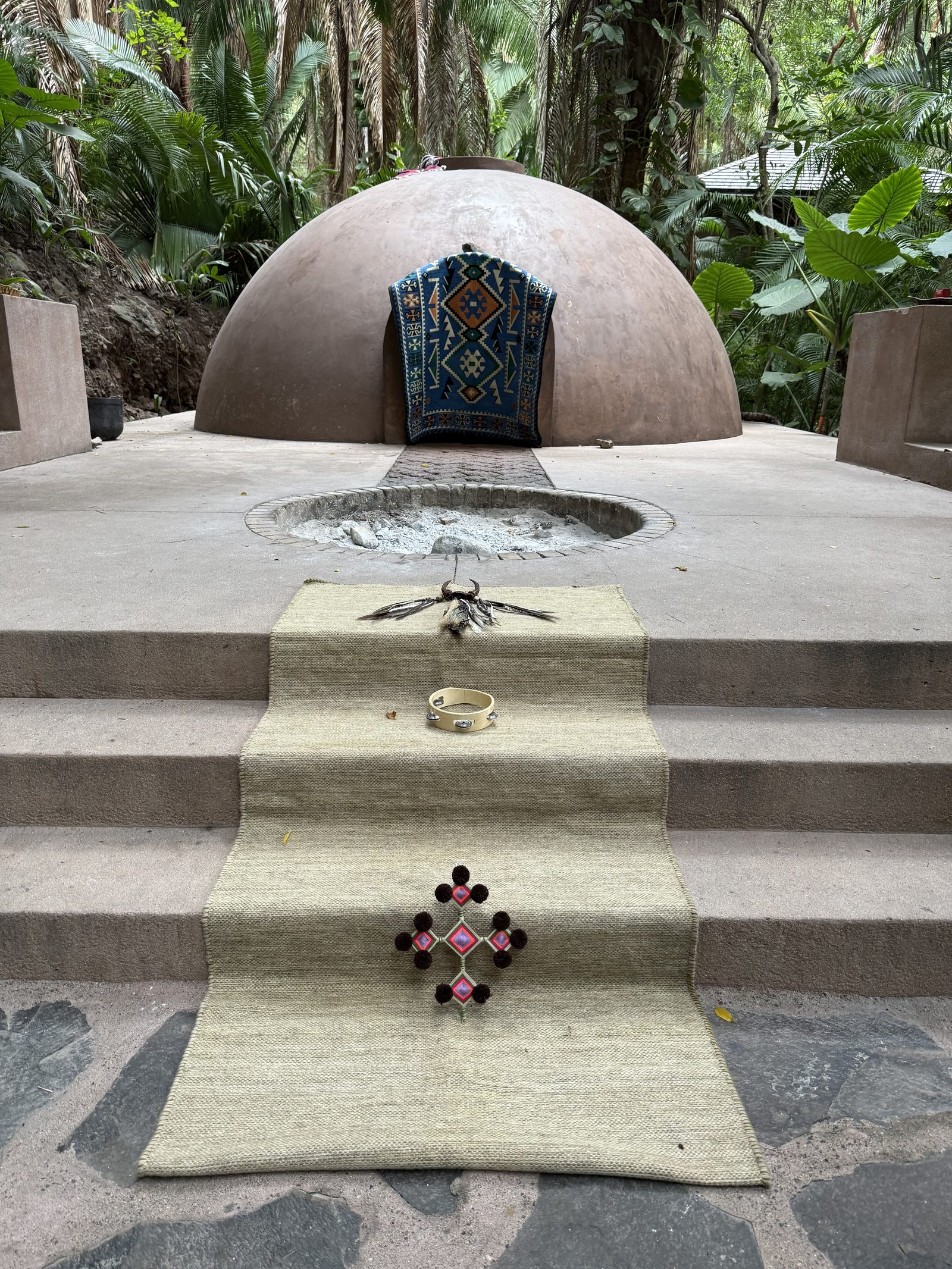
A traditional clay temazcal sweat lodge in a jungle clearing, woven door, ceremonial rug on the steps with offerings
No. 08 · Chapter XI · México

Temazcal

A jungle clearing · early afternoon · 4 January 2026

From the Nahuatl temāzcalli — "house of heat." The dome is built of adobe and volcanic stone; water is poured over heated rocks inside until the air becomes literally unbreathable, the temperature climbing past sixty degrees Celsius. The Mexica used the temazcal both for healing and as the room where a newborn was first bathed. The rug on the steps is the threshold between the outer world and the womb the dome represents. The pottery offering is the entry fee.— Photographer's Note

"In ixtli, in yollotl."
A face, a heart — the Nahuatl word for becoming a person.

— Nahuatl wisdom · Aztec philosophy

Sun 4 Jan 2026 · 13:23  ·  Apple iPhone 16 Pro Max  ·  Main Camera  ·  6.8mm  ·  f/1.78  ·  1/120s  ·  ISO 125

A jungle clearing · Pacific Mexico19.4500° N · 105.0500° W
View on Maps ↗
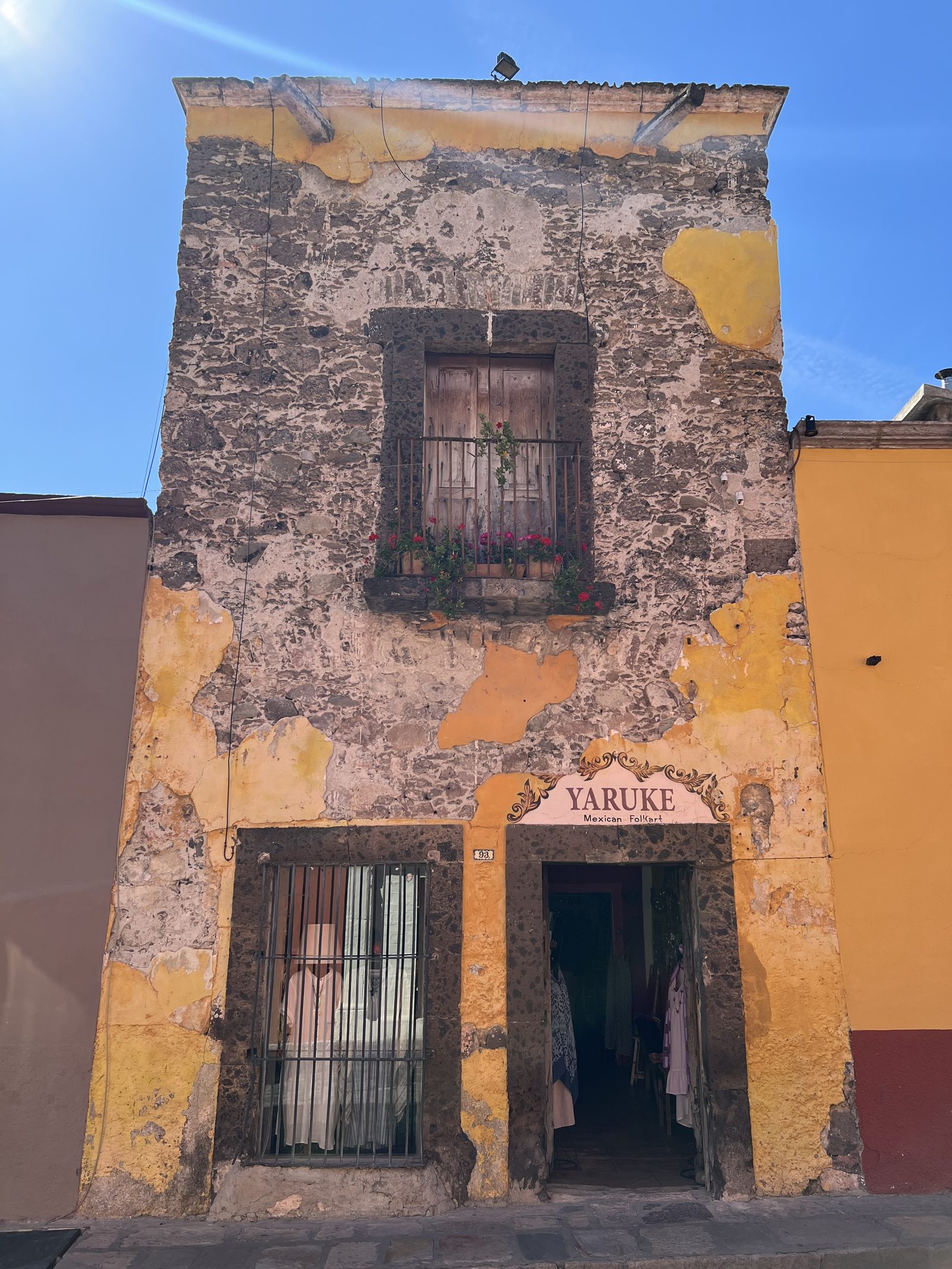
A weathered yellow colonial facade in San Miguel with peeling stucco, a small balcony with potted bougainvillea, and a shop named Yaruke at street level
No. 09 · Chapter XI · México

Yaruke

A facade in San Miguel · Calle Hidalgo · mid-afternoon

A two-storey colonial facade, three centuries old, weathering at exactly the rate the local conservancy allows. The yellow ochre is from the pigment quarries at Pénjamo, twenty kilometres west; the pink wash on top is a later imperial addition by Maximilian's people in the 1860s. The shop at street level — Yaruke — sells masaje, depilación, hair removal. The proprietor took over from her mother and she from hers. The balcony has been waiting for someone to come out onto it for at least forty years.— Photographer's Note

"Las paredes hablan."
The walls talk.

— Mexican proverb

Sun 16 Oct 2022 · 15:37  ·  Apple iPhone 13 Pro Max  ·  Main Camera  ·  5.7mm  ·  f/1.5  ·  1/1810s  ·  ISO 50

San Miguel de Allende · Guanajuato20.9143° N · 100.7440° W
View on Maps ↗
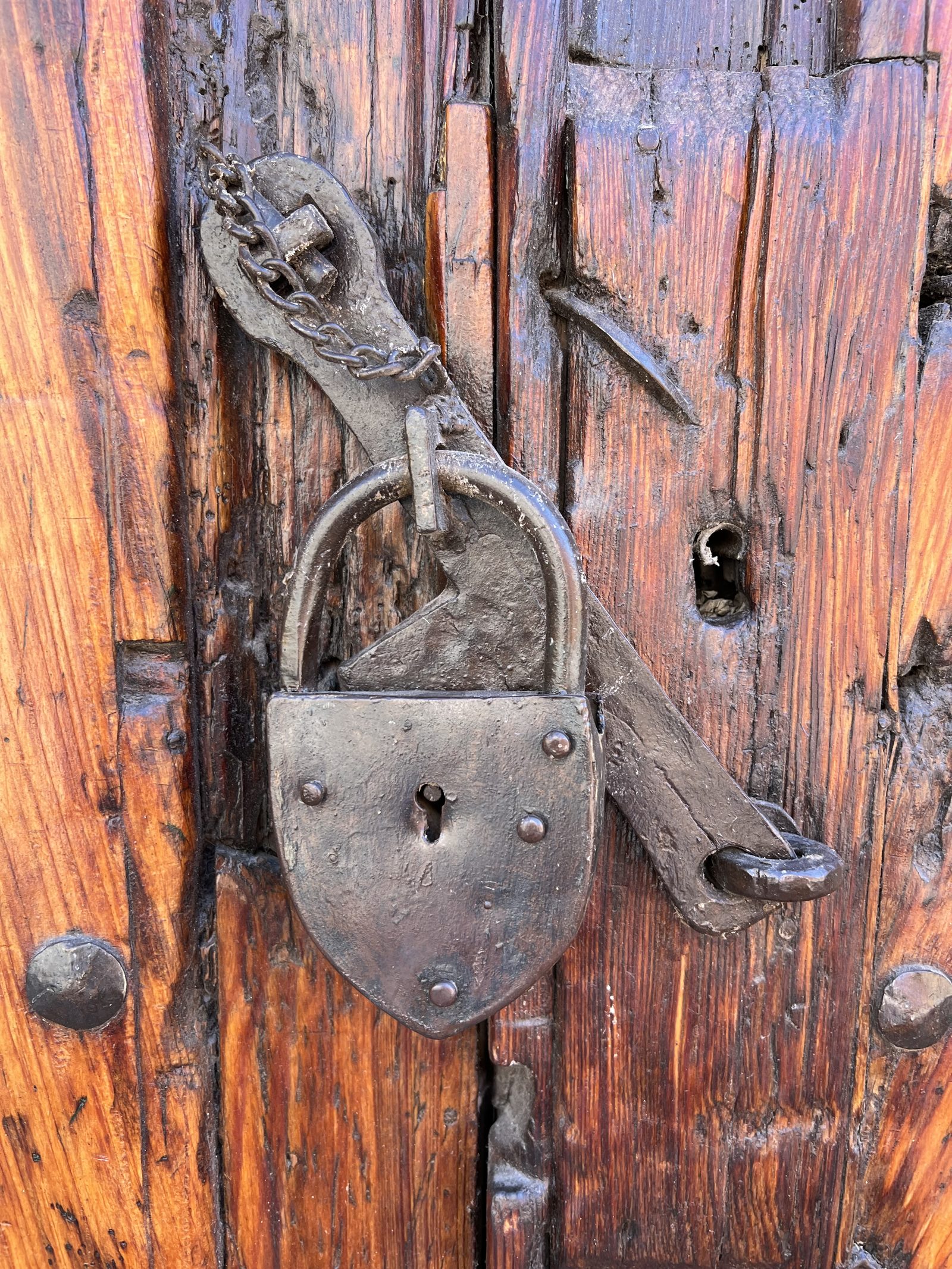
A close-up of an iron Mexican colonial padlock on a heavy weathered wooden door
No. 10 · Chapter XI · México

El Candado

A lock · San Miguel · half an hour after No. 09

Thirty-six minutes after the previous frame, two streets uphill. The padlock is hand-forged iron, the design unchanged since the colonial blacksmiths copied it from Andalusian originals around 1620. The wood underneath is mezquite, harder than oak, taken from a tree that was probably old before the lock was put on it. The chain has rusted into the eyelet. Whoever locked this door last is not the person who will open it.— Photographer's Note

"Lo que se cierra, también se abre."
What is closed can also be opened.

— Mexican proverb

Sun 16 Oct 2022 · 16:13  ·  Apple iPhone 13 Pro Max  ·  Main Camera  ·  5.7mm  ·  f/1.5  ·  1/121s  ·  ISO 50

San Miguel de Allende · Guanajuato20.9143° N · 100.7440° W
View on Maps ↗
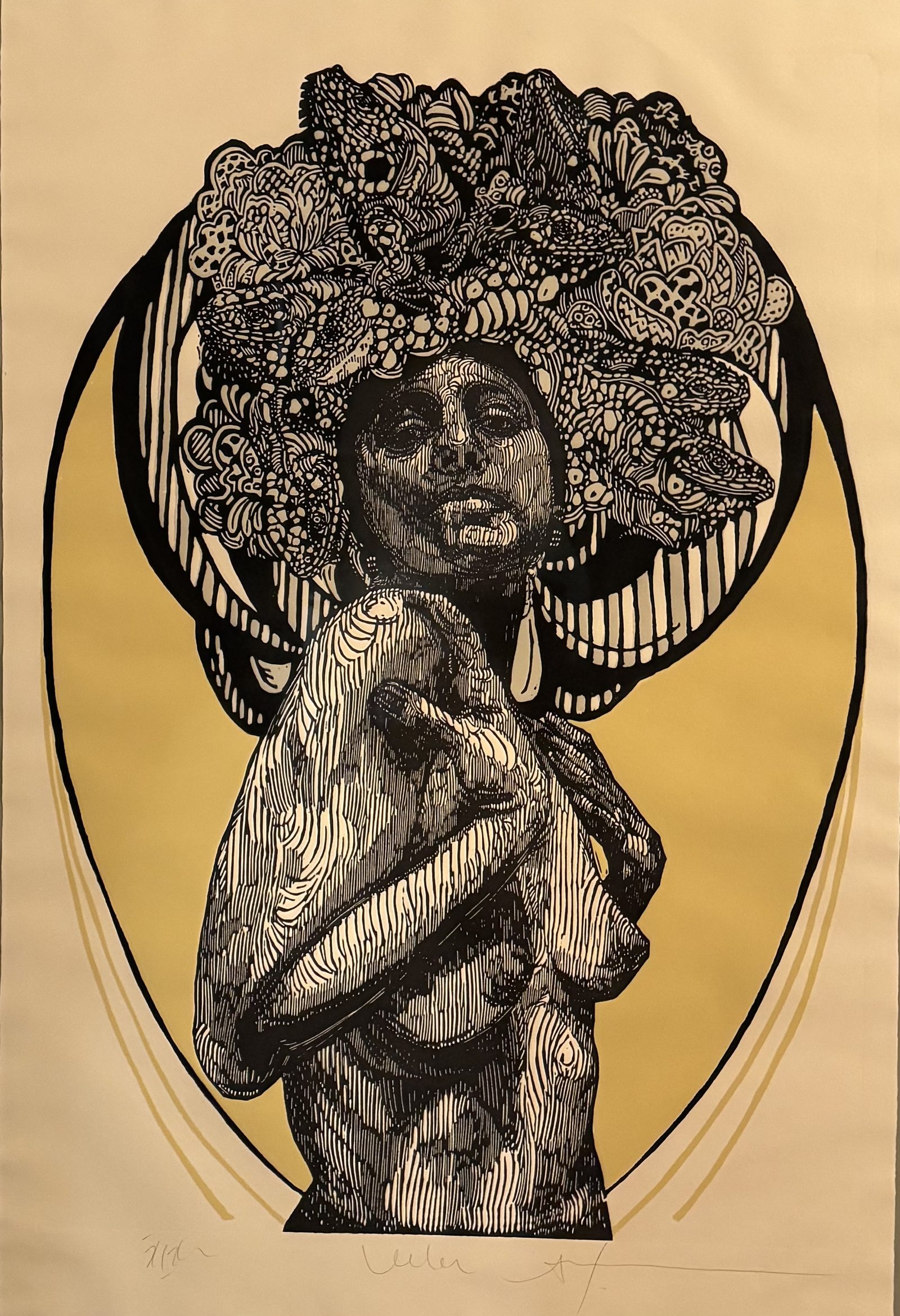
A signed linocut print of a woman with an elaborate floral and seashell headdress, printed in black ink on gold-toned paper
No. 11 · Chapter XI · México

La Madre

A linocut · seen in a San Miguel gallery · Christmas night

Eleven at night, two days after Christmas. A linocut of a woman with a headdress made of shells, agave fruit, and a serpent — the iconography is Mexica, the printmaking technique is from the Taller de Gráfica Popular of the 1930s, the gold ground is contemporary. Mexican printmaking has been one of the great quiet inheritances of the Revolution: nobody could afford a painting, so everyone took home a print. This one, signed and numbered, is still under five hundred dollars.— Photographer's Note

"En que me ofende, cuando reprehendéis
la incultura que ponéis en mí?"
How can it offend me, when you rebuke
the rudeness you yourselves put in me?

— Sor Juana Inés de la Cruz · Hombres Necios · 1690

Thu 26 Dec 2024 · 23:08  ·  Apple iPhone 15 Pro Max  ·  Main Camera  ·  6.8mm  ·  f/1.78  ·  1/30s  ·  ISO 800

A gallery · San Miguel de Allende20.9143° N · 100.7440° W
View on Maps ↗
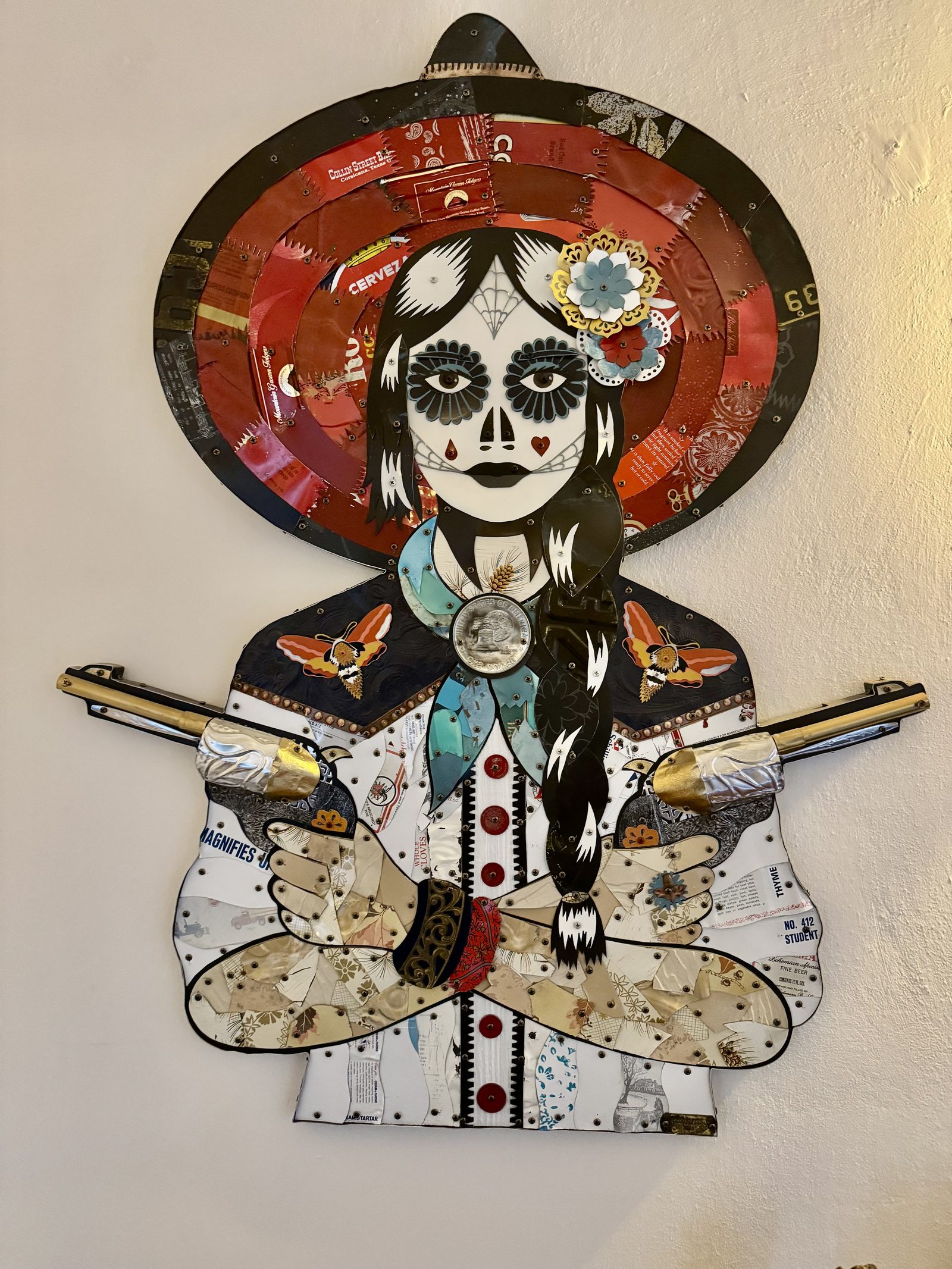
A mixed-media folk-art Catrina figure with painted skull face, a sombrero, holding two pistols, dressed in a collaged shirt of cigarette wrappers and labels
No. 12 · Chapter XI · México

La Catrina

A folk-art collage · San Miguel · the day after

La Catrina — "the elegant lady" — was drawn for the first time in 1910 by José Guadalupe Posada as a satire of upper-class Mexican women trying to look European. Diego Rivera, twenty-six years later, made her the centrepiece of his mural at the Hotel del Prado and put a death-skull face on her. She has been the de-facto patron saint of Día de los Muertos ever since. This contemporary version — pistols, collaged shirt of cigarette wrappers — is a portrait of Mexico's twentieth century in one figure.— Photographer's Note

"La muerte es democrática."
Death is democratic.

— José Guadalupe Posada · creator of La Catrina · 1910

Fri 27 Dec 2024 · 16:45  ·  Apple iPhone 15 Pro Max  ·  Main Camera  ·  6.8mm  ·  f/1.78  ·  1/30s  ·  ISO 800

San Miguel de Allende · Guanajuato20.9143° N · 100.7440° W
View on Maps ↗
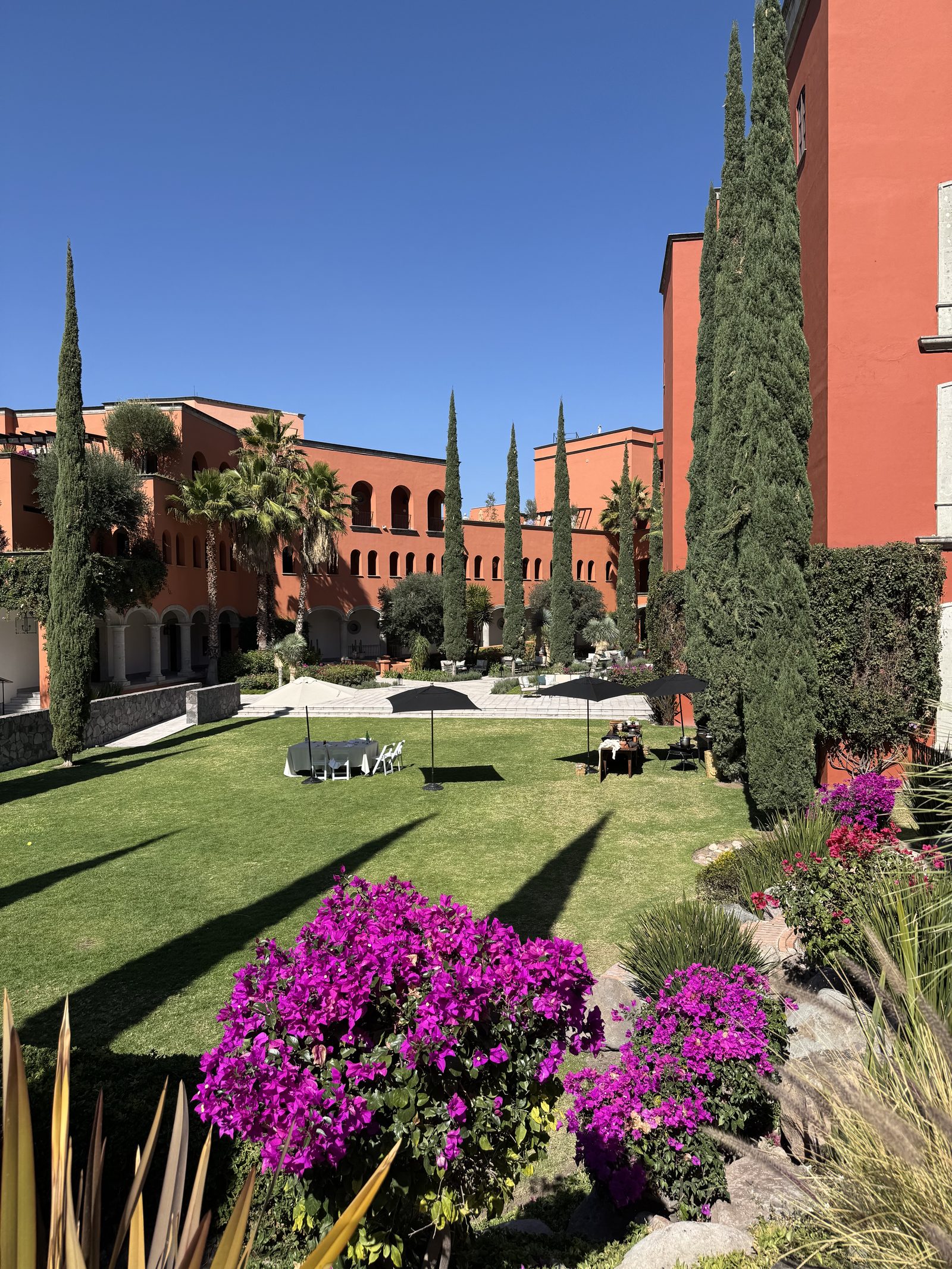
A formal hotel courtyard in San Miguel — red ochre walls, cypress trees, bougainvillea in the foreground, white umbrellas in the lawn
No. 13 · Chapter XI · México

The Courtyard

A small hotel · San Miguel de Allende · 29 December

Twelve-thirty in the afternoon, two days after Christmas, in the courtyard of a hotel housed in an eighteenth-century convent. The red ochre walls — almendrillo, "the almond" — are a colour the local artisans mix from iron oxide and lime; it changes during the day from peach in the morning to terracotta at sunset. Two cypresses by the back wall are older than the convent. The bougainvillea is, as always, an immigrant.— Photographer's Note

"Esta vida es un sueño de los muertos."
This life is a dream of the dead.

— Juan Rulfo · Pedro Páramo · 1955

Sun 29 Dec 2024 · 12:34  ·  Apple iPhone 15 Pro Max  ·  Main Camera  ·  6.8mm  ·  f/1.78  ·  1/4600s  ·  ISO 80

San Miguel de Allende · Guanajuato20.9143° N · 100.7440° W
View on Maps ↗
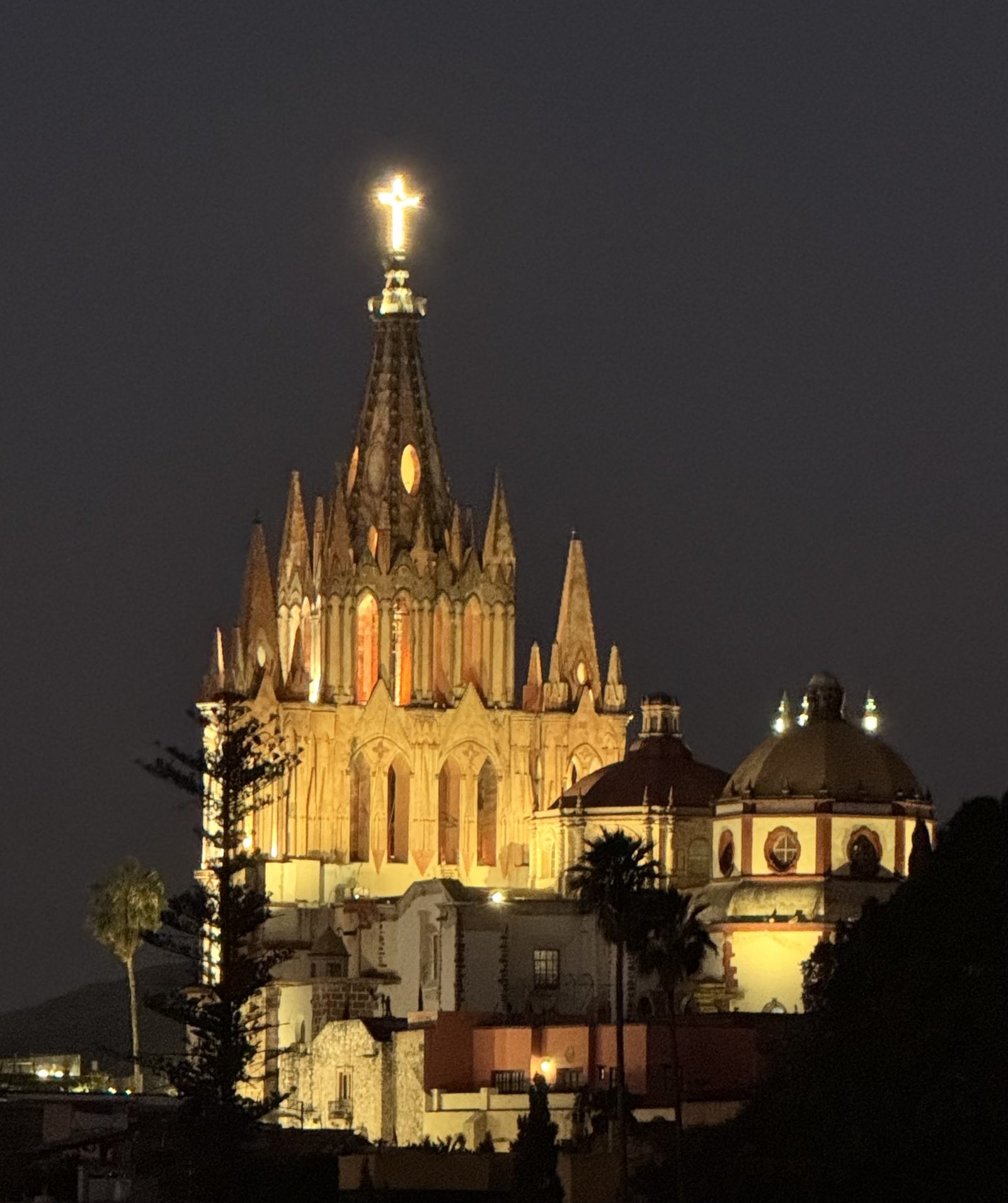
The illuminated neo-Gothic pink towers of La Parroquia de San Miguel Arcángel at night, lit cross at the spire, San Miguel de Allende
No. 14 · Chapter XI · México

La Parroquia

Parroquia de San Miguel Arcángel · the same evening · just before seven

A self-taught indigenous mason named Zeferino Gutiérrez began rebuilding the parish church in 1880. He had never been to Europe; he worked from a postcard of a Gothic cathedral, drawing the plans for the next day's work each evening in the dirt with a stick. What he produced — pink limestone, neo-Gothic, four bell towers, no architect — is now the silhouette every visitor to San Miguel takes home as their photograph. The cross at the top is electric; the rest of it is still done by hand.— Photographer's Note

"Mexico is not a country, it is a feeling."

— Elena Poniatowska · journalist · Cervantes Prize · 2013

Sun 29 Dec 2024 · 18:45  ·  Apple iPhone 15 Pro Max  ·  Telephoto Camera  ·  15.66mm  ·  f/2.8  ·  1/20s  ·  ISO 2500

La Parroquia · Jardín Principal · San Miguel20.9145° N · 100.7440° W
View on Maps ↗
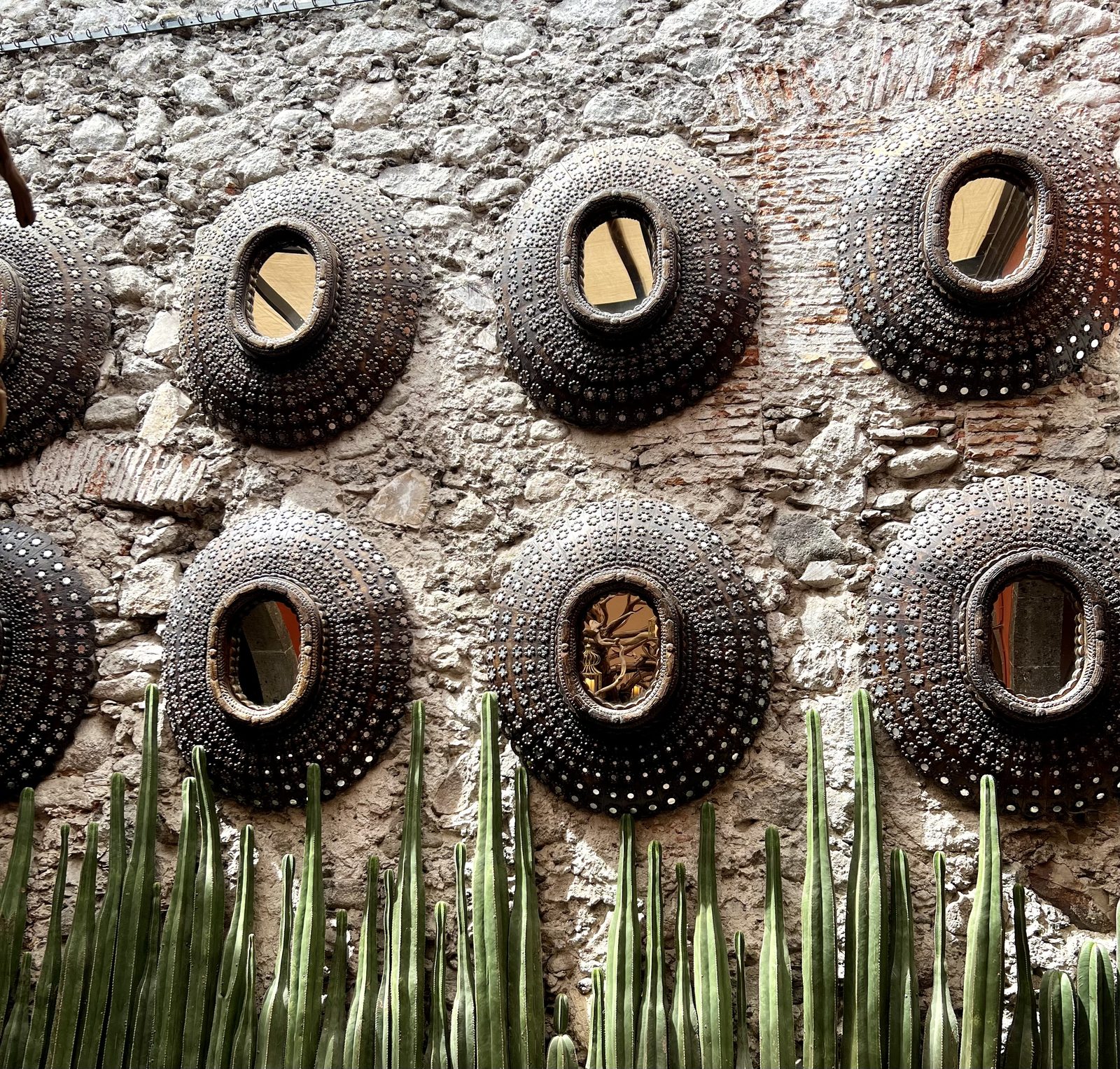
A wall installation of round black ceramic vessels with mirrored interiors mounted on a rough stone wall, with rows of agave plants at the base
No. 15 · Chapter XI · México

Vasijas

An installation · 2023

Eight black ceramic vessels mounted on a rough limestone wall, mirrors at the back of each so they each hold their own small reflection of the courtyard. The form is pre-Columbian — a comal, the round griddle for tortillas, scaled up — but the gesture, hanging them as a constellation, is contemporary. Mexican craft has been very good at this for a long time: taking a piece of utility from one century and making it a piece of feeling in another.— Photographer's Note

"El arte no es la verdad. El arte es una mentira que nos hace ver la verdad."
Art is not truth. Art is a lie that makes us see truth.

— Diego Rivera · paraphrasing Picasso · México · 1923

Tue 19 Sep 2023 · 15:54  ·  Apple iPhone 14 Pro Max  ·  Main Camera  ·  6.86mm  ·  f/1.78  ·  1/40s  ·  ISO 640

San Miguel de Allende · Guanajuato20.9143° N · 100.7440° W
View on Maps ↗
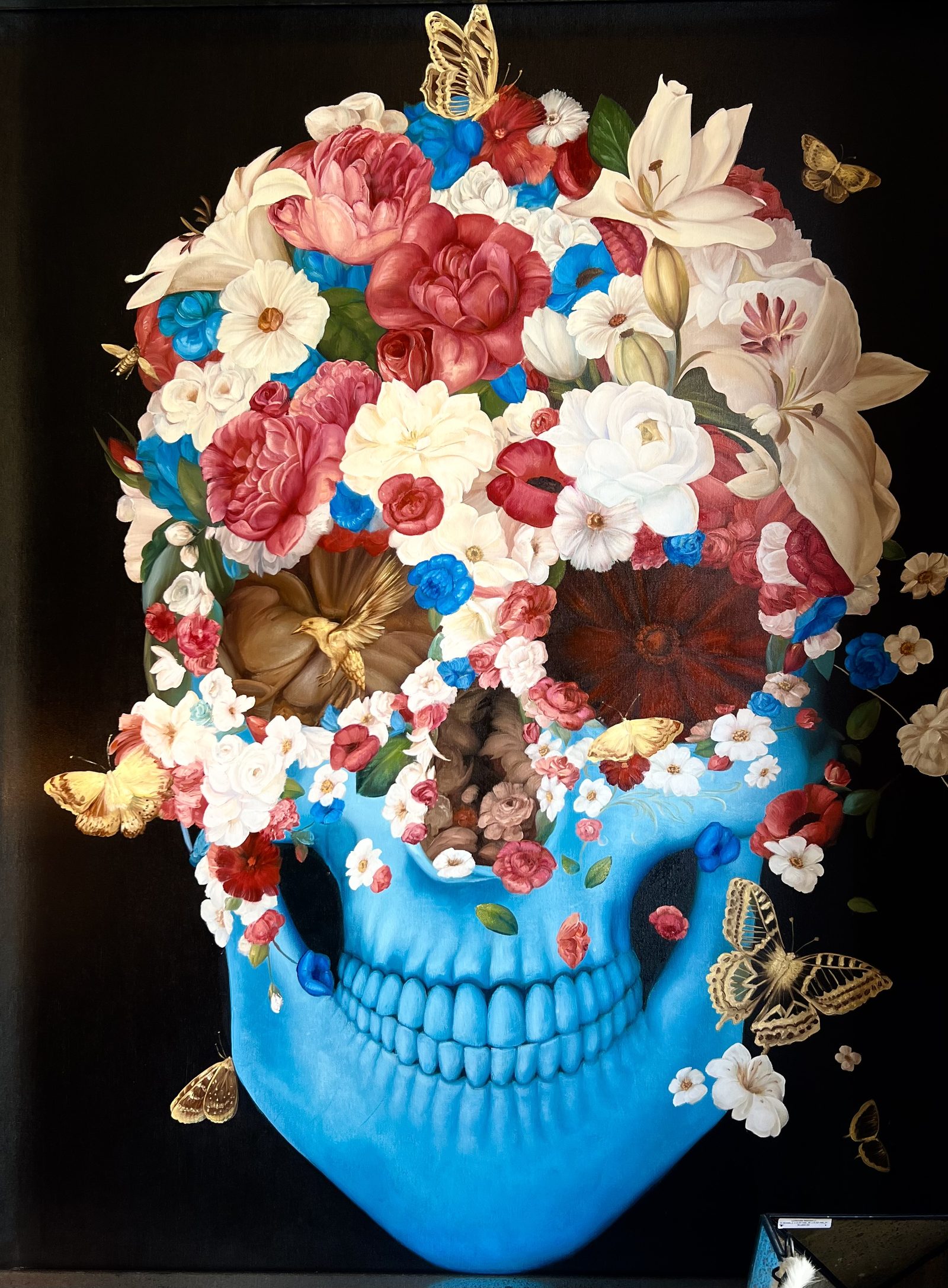
A neo-baroque oil painting of a blue skull crowned and surrounded by abundant flowers — roses, peonies, lilies — with butterflies among the petals
No. 16 · Chapter XI · México

Calavera en Flor

A painting · 2023

A blue skull, crowned with peonies, surrounded by butterflies. The colour palette is Frida and the iconography is Día de los Muertos, but the painting is neither — it is contemporary, a small canvas seen in a gallery without a label. Mexico's instinct for putting the death's head inside the flower is at least three thousand years old. The Aztecs called the cycle xōchipilli — flower-blood — and considered it the natural form of beauty: not in spite of mortality, because of it.— Photographer's Note

"They thought I was a Surrealist, but I wasn't. I never painted dreams. I painted my own reality."

— Frida Kahlo · México · 1953

Fri 7 Apr 2023 · 13:21  ·  Apple iPhone 13 Pro Max  ·  Main Camera  ·  5.7mm  ·  f/1.5  ·  1/120s  ·  ISO 80

A gallery · México19.4326° N · 99.1332° W
View on Maps ↗
— Next Chapter —
Jamaica
Chapter XII of XIII
← All Chapters